
When Success Isn’t the Finish Line
Forest Hills Central didn’t need a new program because the traditional indicators were flashing red.
Quite the opposite.
FHC is a high-performing school with a strong college-going culture. That is part of what makes what Principal Jonathan Haga and his team have built worth examining.
They looked beyond the indicators telling them things were working and began paying closer attention to what students were experiencing.
What followed was not an attempt to replace academic success, but to ask what a different kind of experience might make possible alongside it.
Thirteen days into the school year, I got to see what that looks like.
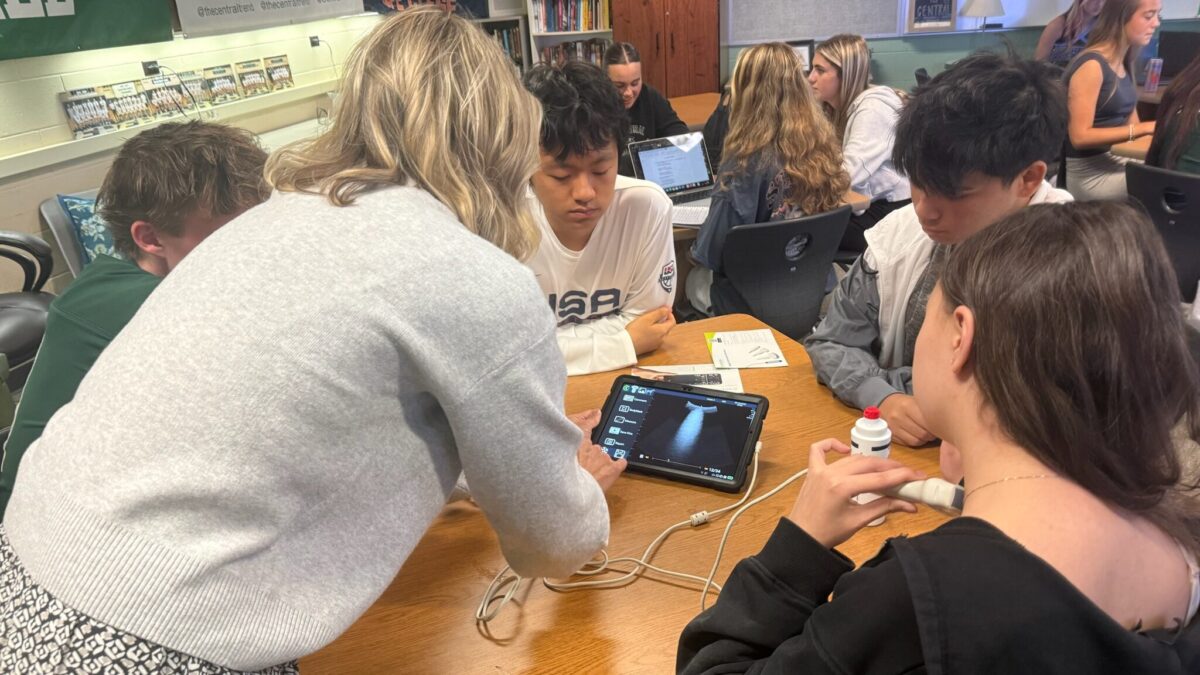
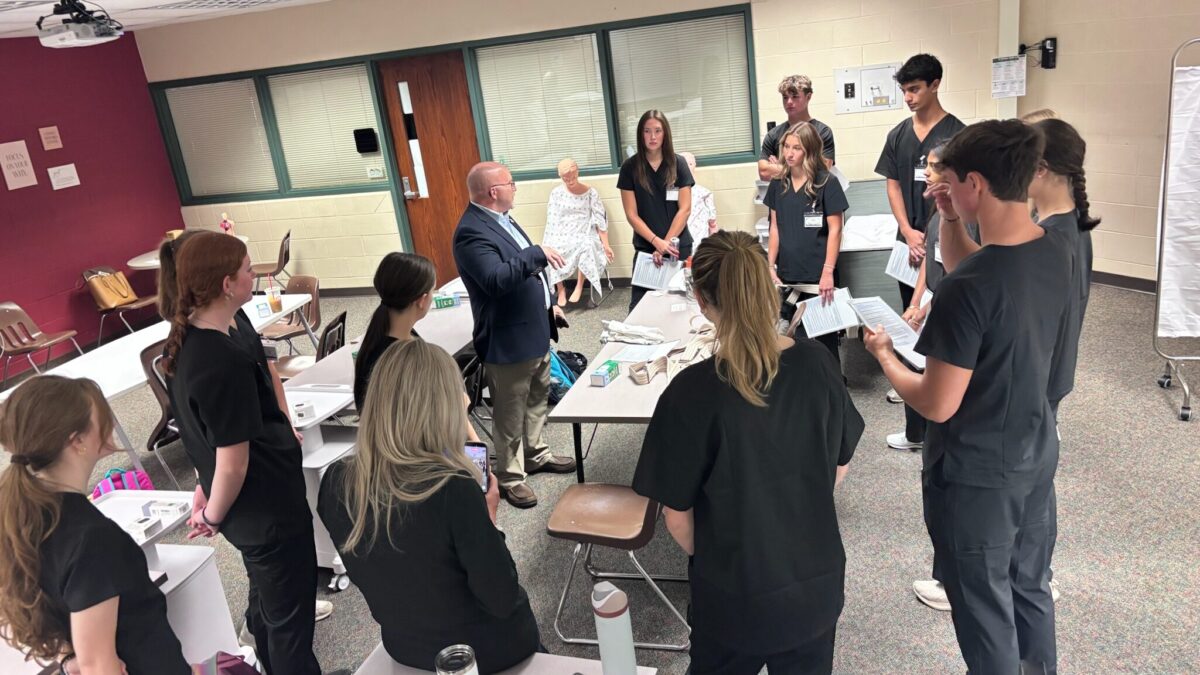
Students in FHC’s new Health Careers Academy were assessing patients, learning how to safely move and transfer them, and conducting ultrasounds.
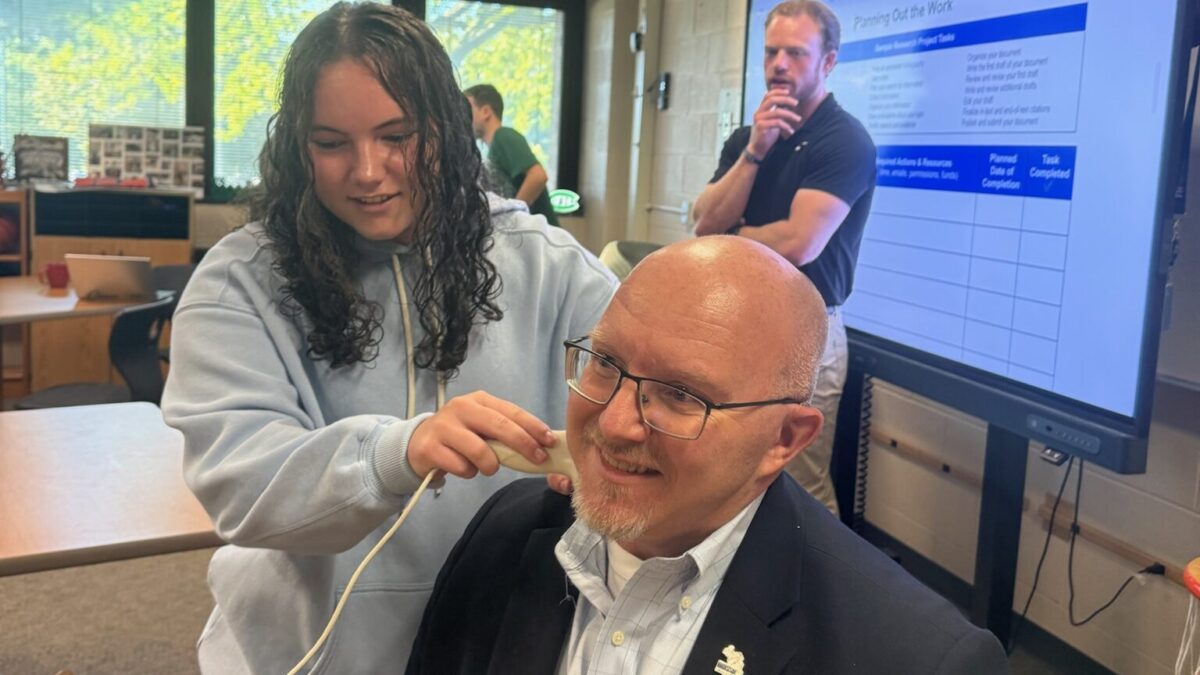
My niece Carly, a junior just beginning the program, even got some unexpected practice when she discovered I was visiting and performed an ultrasound on my neck.
The equipment made the program easy to notice. But as I talked with students and teachers, I found myself wondering about something else.
What was this experience making possible for both students and adults?
Listen to the Students
Students talked about getting to actually do the work rather than simply learning about it. They could gain hands-on experience, learn alongside healthcare professionals, earn credentials and, importantly, test an interest in medicine before investing years and tuition pursuing it. For them, this wasn’t simply preparation for what might come later. The experience itself was helping them make sense of what they wanted next.
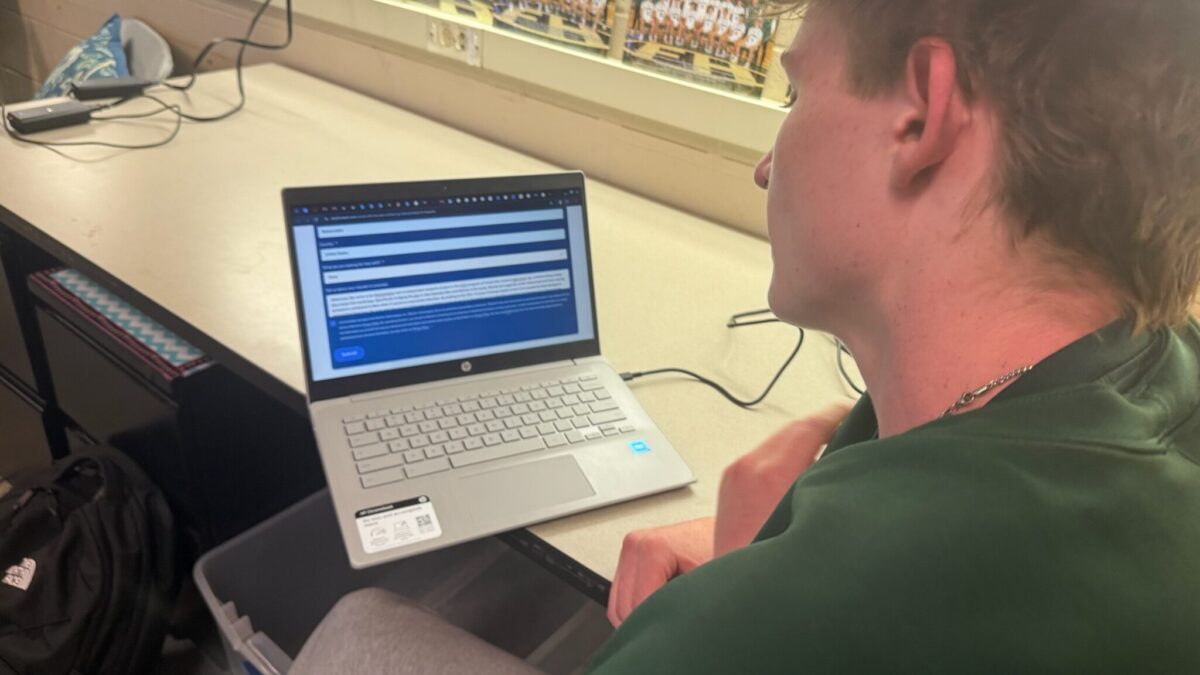
One student talked about recognizing what an unusual opportunity they had been given and not wanting to waste it pursuing something they weren’t passionate about.
Another was already reaching beyond the classroom, contacting a medical technology company as he investigated why cardiac monitoring technology may be less effective at detecting cardiac events in women than in men, and what that could mean for women’s health.
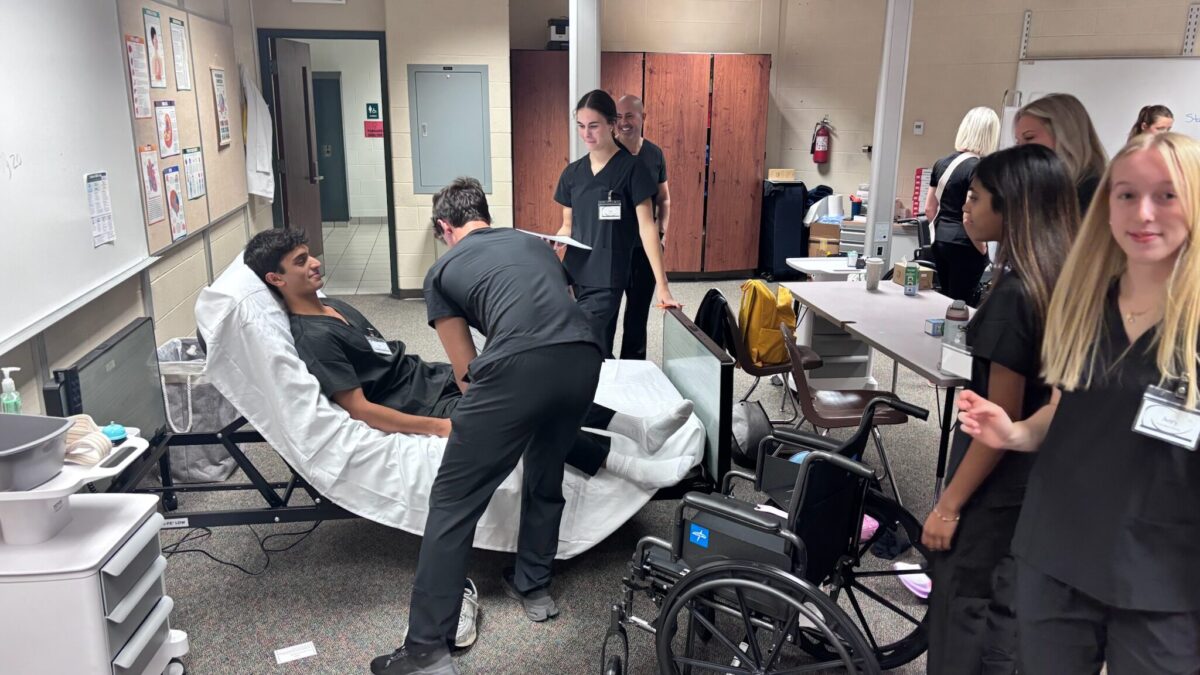
These weren’t simply students enjoying a new program.
They were beginning to exercise greater agency over their learning. They were connecting what they were learning to questions they cared about, experiences they wanted and possibilities they were beginning to imagine for themselves.
When I asked what they appreciated about the adults working alongside them, their answers revealed something else.
They talked about patience, being able to ask questions without feeling judged and professionals willing to give their time so students could learn. But they weren’t describing adults who had made learning easier. They were describing adults who had created the conditions for them to take on harder, more meaningful work.
These students weren’t simply learning the names and functions of parts of the body. They were learning to assess a patient, move someone safely and use technology to better understand what was happening inside the body. They weren’t simply hearing about healthcare careers. They were interacting with professionals and beginning to experience the work itself, discovering whether this was work they could see themselves doing.
What they seemed to value wasn’t success in school for its own sake. It was the opportunity to use what they were learning for something that felt real and mattered beyond a grade.
Listen to the Adults
The adults helped me see what was happening next.
AP Research teacher Jordan George described students approaching him with ideas about what they wanted to research rather than waiting for him to provide the question. Their curiosity, he told me, was energizing his own work as a teacher.
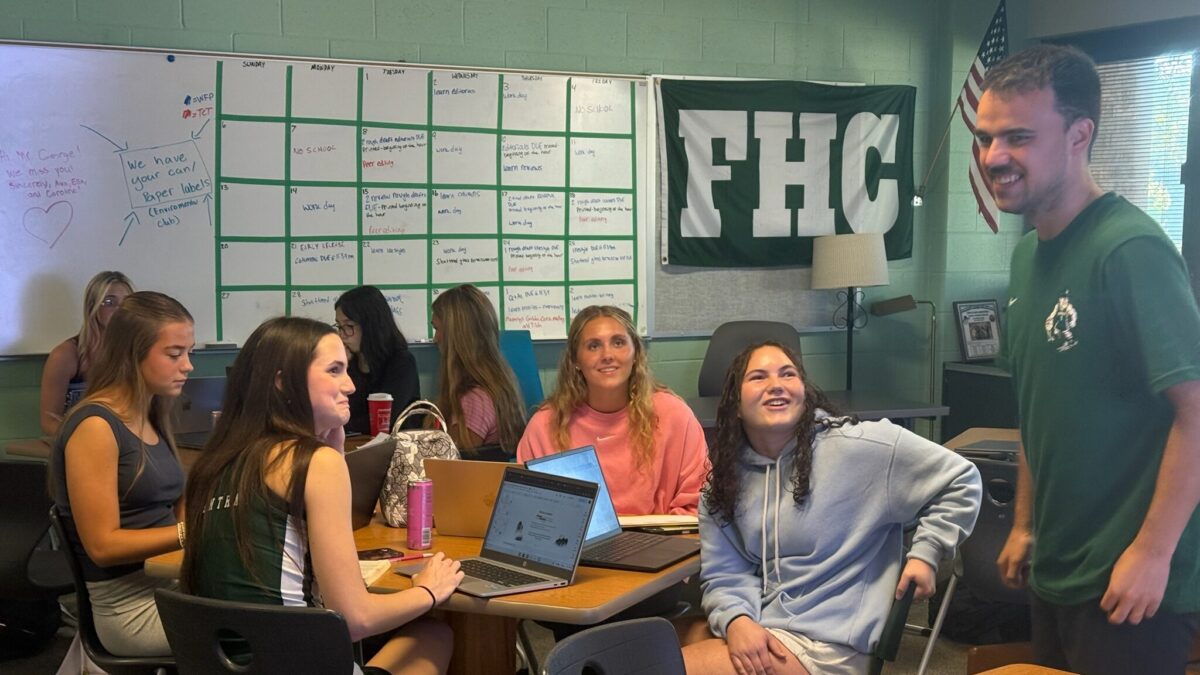
Other adults helped me see how the pieces were connecting. Human Anatomy and Physiology teacher Alex Webster could see students taking what they were learning in class and applying it through clinical experiences. Alex Coon, an athletic trainer who helps oversee the CTE Health Lab experiences, talked about wishing opportunities like these had existed when he was in high school. Through Jared Lowe’s work-experience and co-op component, students will eventually take their learning beyond the school and into workplaces alongside healthcare professionals and patients.
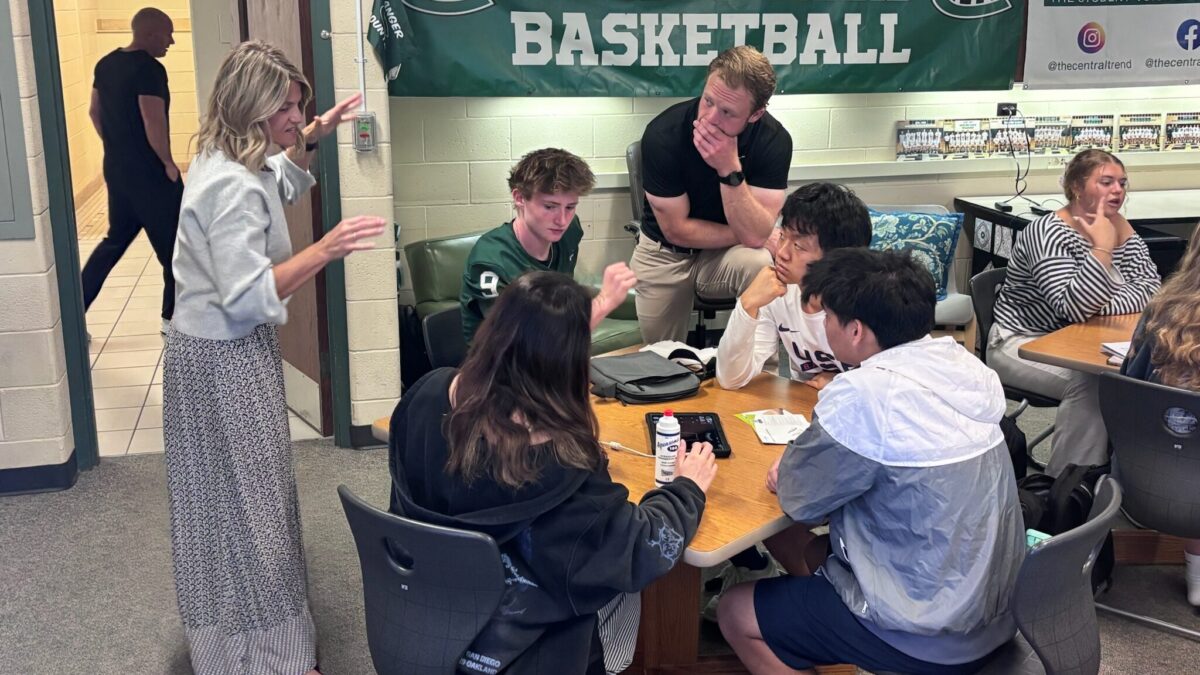
Ashley Bauer helped me see another side of that exchange. She teaches the CNA portion of the program through the Center for Medical Training and spends much of her professional life working with adults. She talked about what it meant to step outside that setting and work with young people. Their interest was fueling her work, too, while giving her an opportunity to invest in students who may someday become her colleagues and even the healthcare professionals caring for her generation.
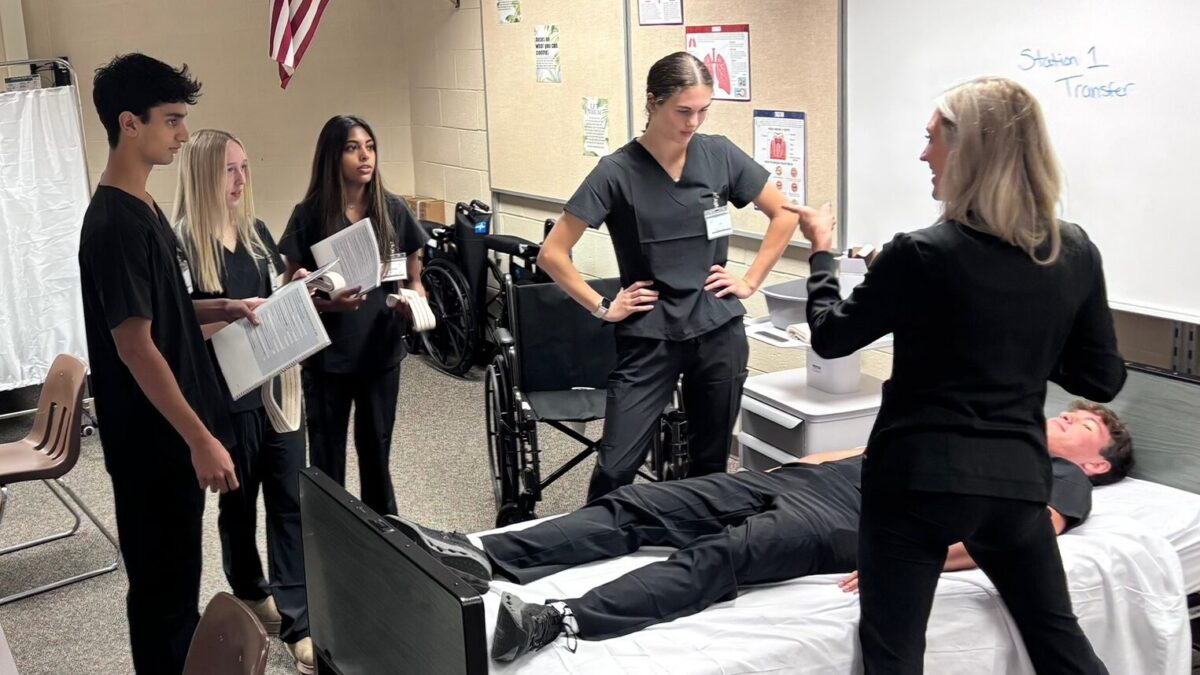
What struck me was that the learning wasn’t moving in only one direction.
The adults had helped create conditions where students could take on meaningful work, pursue their own questions and explore interests that mattered to them. The work hadn’t become easier. Students had more reason to invest themselves in doing it.
And that investment was affecting the adults, too.
Students were bringing greater curiosity, ownership and ambition into the experience. The adults were drawing energy from it. What they had helped create for students was beginning to shape their own experience of the work.
The effect was moving in both directions.
That’s when the story became bigger than the Health Careers Academy for me.
Leadership Close to the Work
Jon’s leadership was visible in that dynamic, too.
Not because he was standing outside the classroom explaining the vision to me. He was inside the experience. Sitting with students. Asking questions. Listening. Learning alongside his staff.
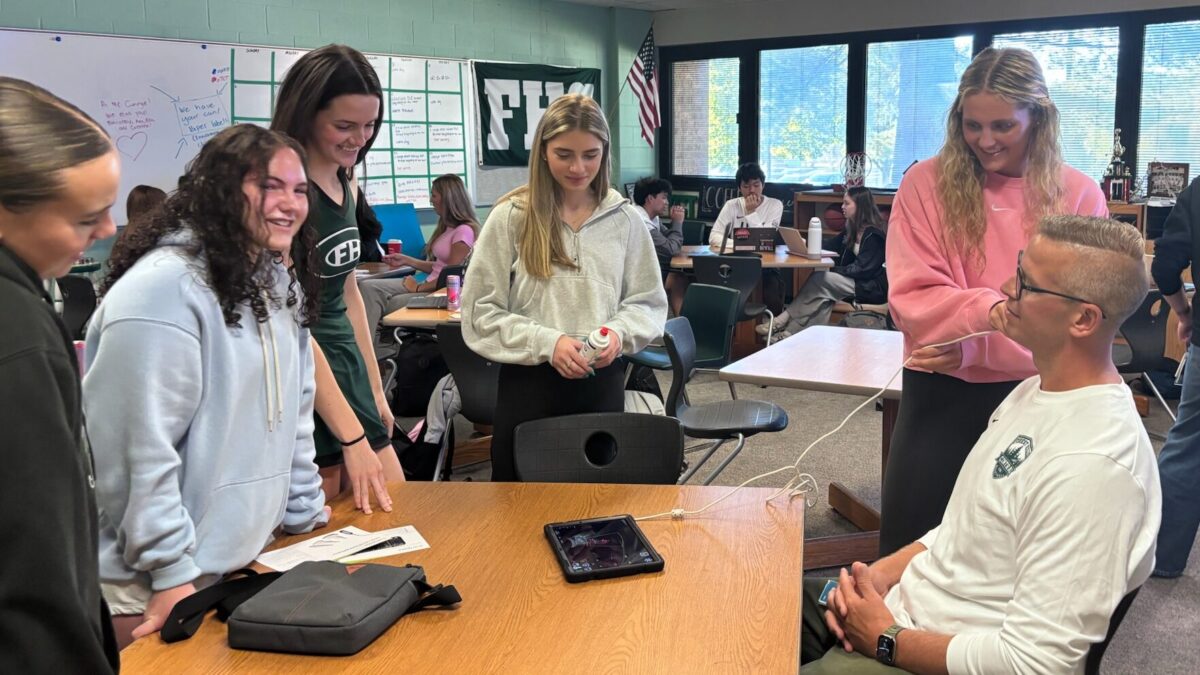
That wasn’t accidental. FHC’s vision of “Every Ranger Known” shapes how Jon thinks about his own presence in the school. As he put it, 1,000 Rangers means 1,000 different stories and experiences that shape their culture and their work. For him, that means spending more time in classrooms and in front of students than behind a desk.
But his leadership had started long before my visit.
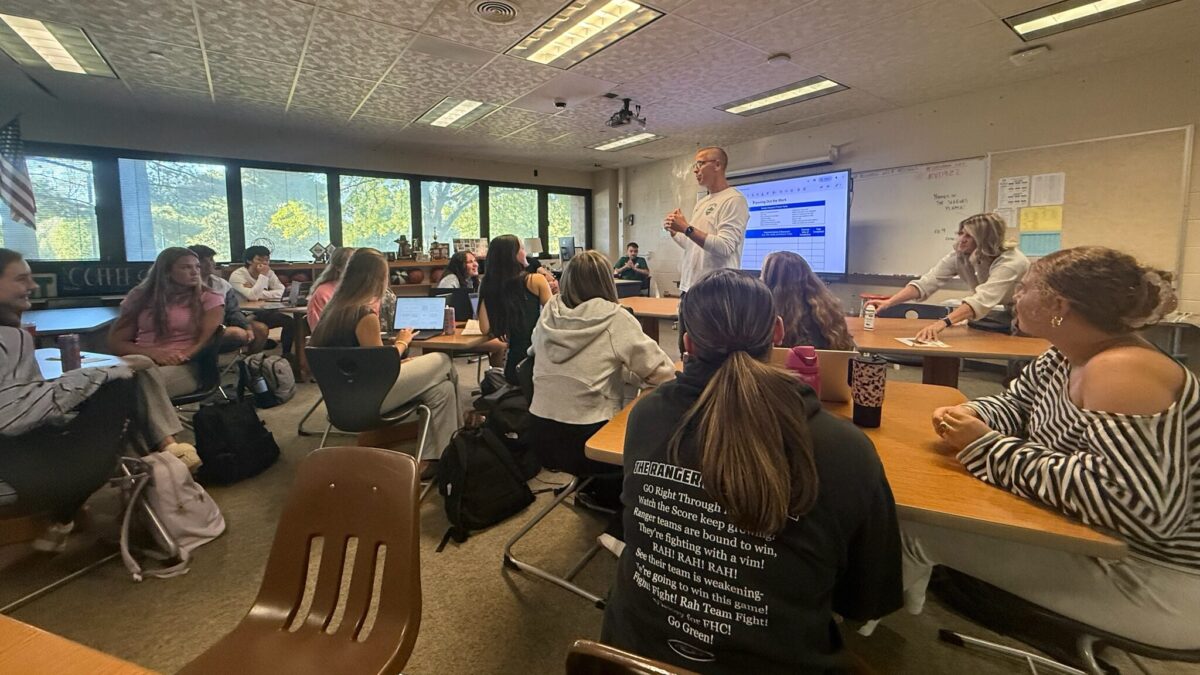
Jon valued what FHC’s strong academic culture was already making possible while also noticing the pressure that can accompany it. For him, the work kept coming back to the student experience. Could students be highly successful academically and also experience high school as a place where they discovered interests, developed competence and began seeing possibilities for themselves?
That question eventually became action.
Working with teachers, an athletic trainer, business and industry partners, Kent ISD and others, the team created a program where students can earn college credit and industry-recognized credentials, participate in work-based learning and eventually complete an internship.
The timeline from idea to implementation was remarkably short.
They didn’t wait for perfect conditions. While an addition that will eventually house the program is being built, students are already learning in a retrofitted traditional classroom.
It reminded me of something I think we often get wrong about change. We overestimate what we can accomplish in a day and underestimate what we can accomplish in three. When change doesn’t happen quickly enough, we can conclude it isn’t working. When transformation seems years away, we can decide not to begin.
Jon and his team did neither. They took the next best step, then the next, and kept stacking those steps over time.
Less than nine months later, students were walking into what had once been an idea.
What the Work Can Teach Us
There are plenty of technical lessons other schools could learn from FHC: partnerships, funding, scheduling, credentials, work-based learning and implementation.
But that’s not the lesson I carried away.
Schools naturally direct attention toward what isn’t working. Achievement slips. Attendance declines. Behavior changes. Something moves in the wrong direction, and our attention follows.
Success doesn’t always demand the same attention.
That’s what makes it easy for success to become a finish line when it could be an invitation to look more closely.
Jon and his team didn’t reject what was already working. They asked what else it could make possible.
And perhaps the most interesting evidence of what they created wasn’t the ultrasound machine, the college credits or even the certifications.
It was in students beginning to ask their own questions.
It was in adults becoming energized by those questions.
It was in a principal sitting among them, still listening.
Maybe that’s worth looking for more often.
What can the work already happening in our schools teach us about the conditions that allow students and adults to learn, grow and see new possibilities?
Because sometimes the next opportunity for students isn’t hiding inside a problem.
It is waiting just beyond something that is already working.