
When I walked into a middle school classroom at AMPed Hybrid Academy last spring, I hadn’t expected to attend a funeral. But there, in the middle of the classroom, was a memorial for Johnny Cade. Students had recently finished reading The Outsiders, and their assignment was to write either a eulogy or an elegy from the perspective of Ponyboy or Dally. One by one, students stood before their classmates and shared what they had written. When the memorial concluded, their work wasn’t finished. Students reflected on what they had heard, identified character traits revealed through their classmates’ writing, compared Ponyboy’s and Dally’s perspectives, and considered how those perspectives shaped their understanding of Johnny and his death. There was reading. Writing. Speaking. Listening. Analysis. Perspective-taking. There was rigor. What I couldn’t see simply by watching the lesson was how significant that moment was for some of the students standing in front of the room.
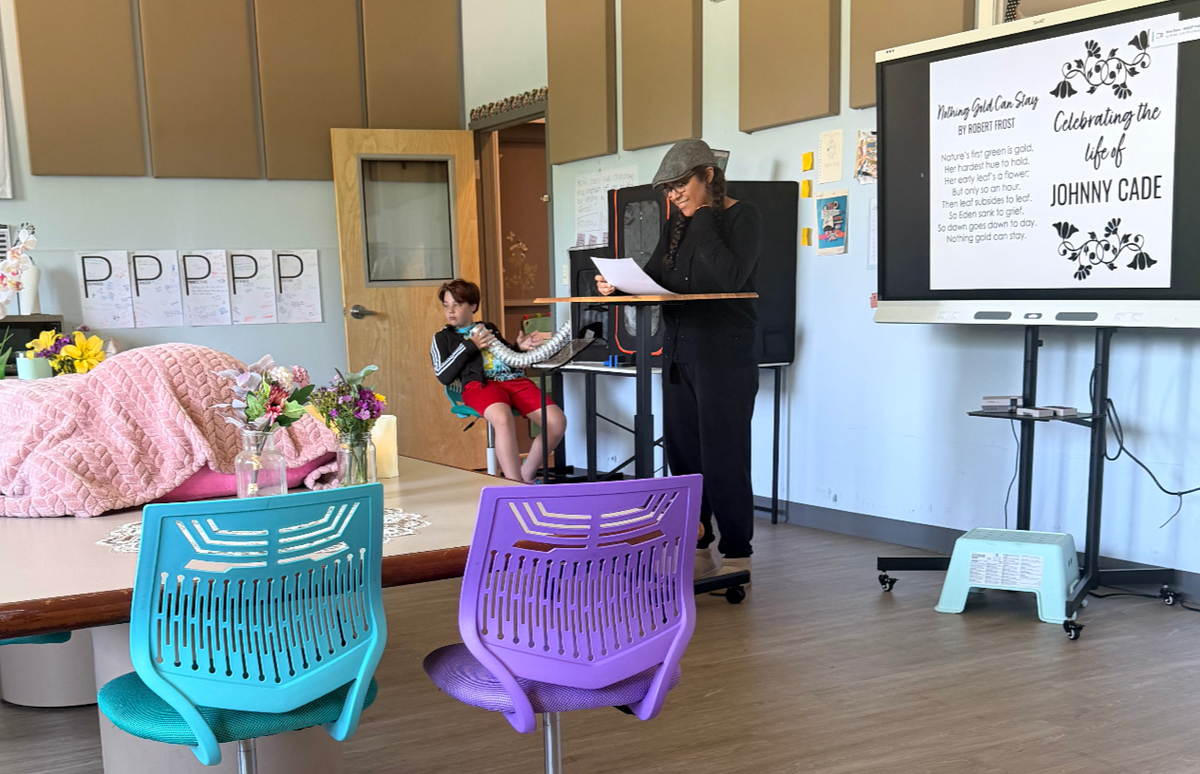
Students at AMPed Hybrid Academy bring The Outsiders to life through writing, presentation, and literary analysis.
Rethinking What School Can Look Like
AMPed Hybrid Academy is a private hybrid school founded and led by Ann Marie Palazzolo, who also teaches in the program. Drawing on her background in special education and her belief that differentiation benefits all learners, Ann Marie established the school following the COVID-19 pandemic. Her approach grew from a familiar principle in education: students don’t all learn in the same way, and providing different pathways to learning can help more students succeed.
Rather than treating differentiation as something that happens only within the classroom, Ann Marie considered what it might look like to build an entire learning environment around that philosophy.
Today, middle school students attend AMPed in person two to three days each week. The program serves students and families who sought something different after finding that traditional school environments weren’t meeting their needs.
Some students arrived performing significantly below grade level in reading and writing. Others had experienced anxiety or social-emotional challenges that made school difficult. For some, school avoidance had become a pattern, resulting in significant attendance concerns.
During my visit, Ann Marie shared some of the stories behind the students I was watching. Several who confidently stood before their peers during the Johnny Cade memorial would not have been comfortable doing so when they first arrived. Over time, she explained, intentional relationship building and a supportive classroom culture helped students develop the confidence to participate, take academic risks and engage with their learning.
She also shared reading data demonstrating academic growth, including examples of students who entered AMPed reading below grade level and, within one to two years, were performing beyond their current grade level. While those results reflect the experiences of students in one small program, they offer an encouraging glimpse into the progress these particular students have made.
But one of Ann Marie’s observations about student growth stayed with me even more than the numbers.
“Kids start to see themselves as capable learners,” she said.
That is a powerful outcome, particularly for students whose previous school experiences may have left them questioning their ability to succeed.
Different Conditions, Same Questions
There is an important distinction to make about what I observed. AMPed operates under conditions very different from those of most traditional public schools. There were approximately 15 students in the classroom I visited. Students could work from traditional chairs, couches or other spaces around the room. When the class transitioned from English language arts to social studies, some students remained inside while others chose to work outdoors. I found students completing assignments at picnic tables and even tucked into spaces on the playground.
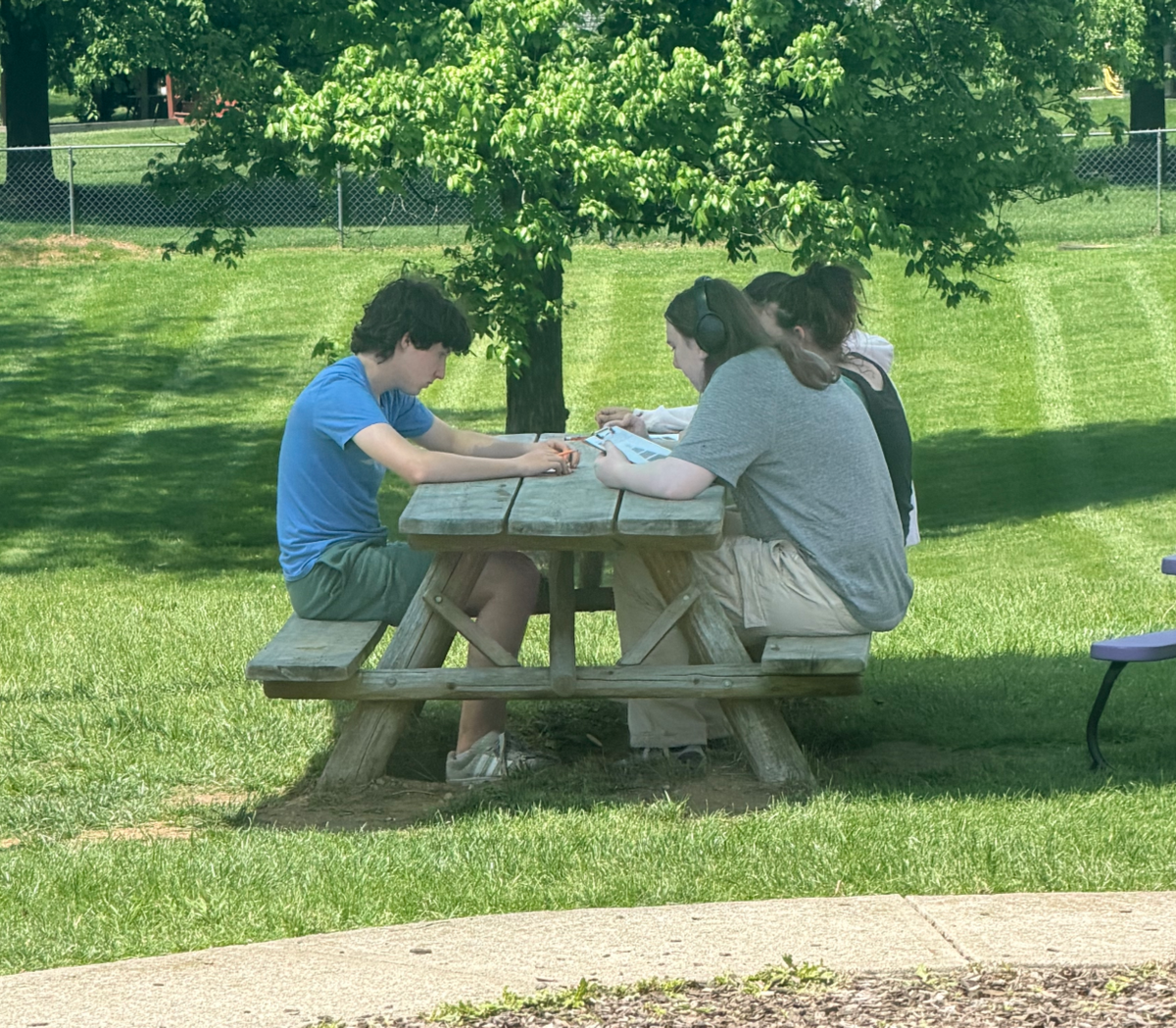
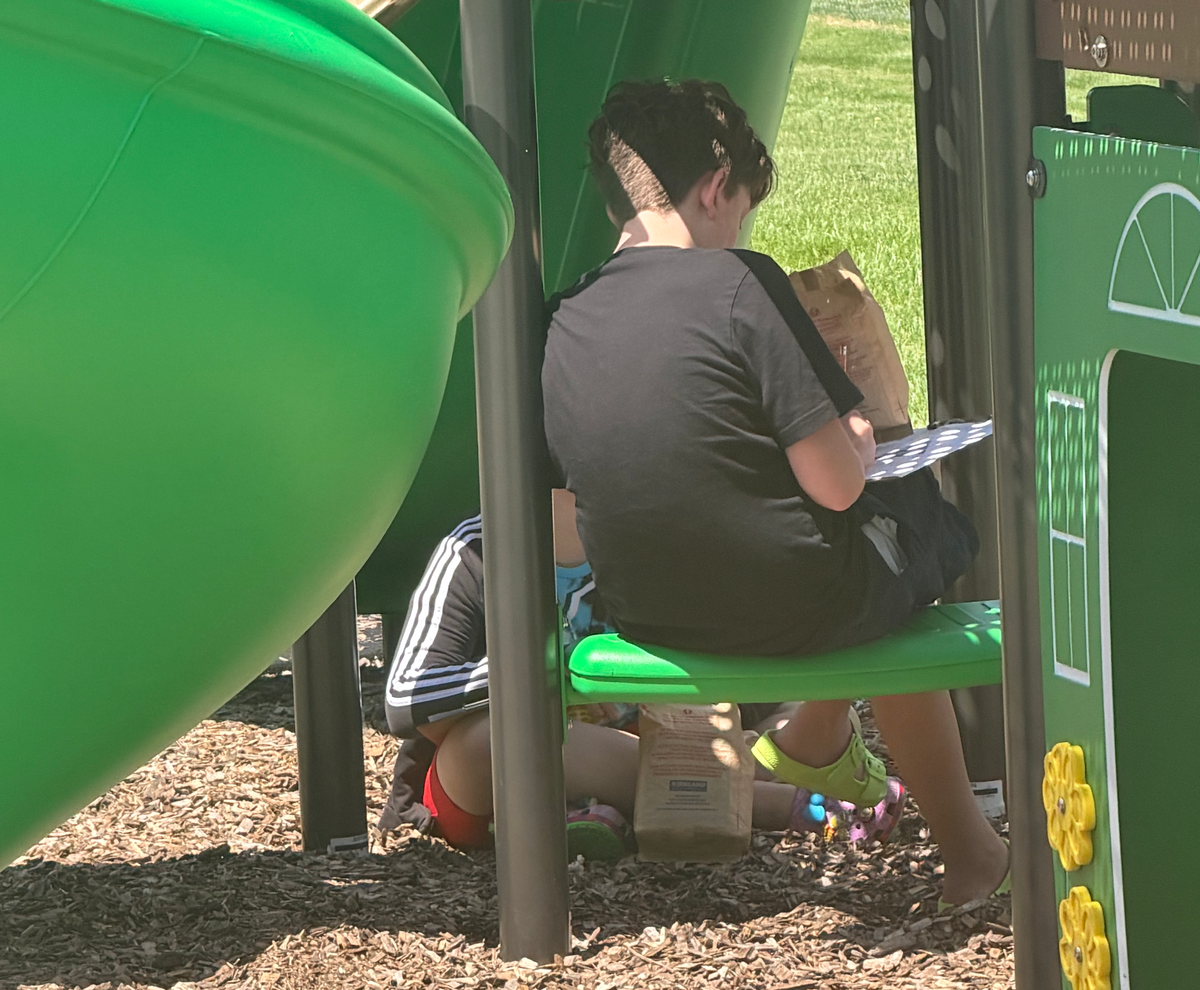
Students work independently in outdoor spaces, exercising choice in where they complete their assignments.
At first glance, it would be easy to focus on the unconventional learning environment. But the furniture and flexible spaces weren’t what interested me most. It was what students were doing within those spaces. They were working. They were engaged. And they appeared comfortable making choices about where they could be most productive.
Of course, there are practical considerations that cannot be overlooked. A private hybrid program with a small enrollment operates differently from a public school serving hundreds or thousands of students. Public school leaders must navigate staffing, schedules, curriculum requirements, student services, accountability, safety and a wide range of learning needs, often within significant resource constraints.
Those realities matter. And student choice, by itself, doesn’t guarantee engagement or academic success. Flexible learning environments still require clear expectations, purposeful instruction, and accountability for learning. I didn’t leave AMPed wondering how public schools could become more like AMPed.
I left wondering what we could learn from the conditions that were helping these students engage in learning.
Because underneath the small class size, couches and unconventional learning spaces was something much more transferable. Students were known. Students were expected to engage in challenging work. Students received support to access that work. And students had some agency in determining how they could be most successful doing it. Those principles aren’t exclusive to any particular school model.
Rigor Doesn’t Have to Mean Rigidity
When I later asked Ann Marie what she wished more educators understood about rigor and differentiation, her answer was simple.
“I wish they understood that the two can coexist,” she said.
She described her philosophy as “teach to the top, differentiate down.”
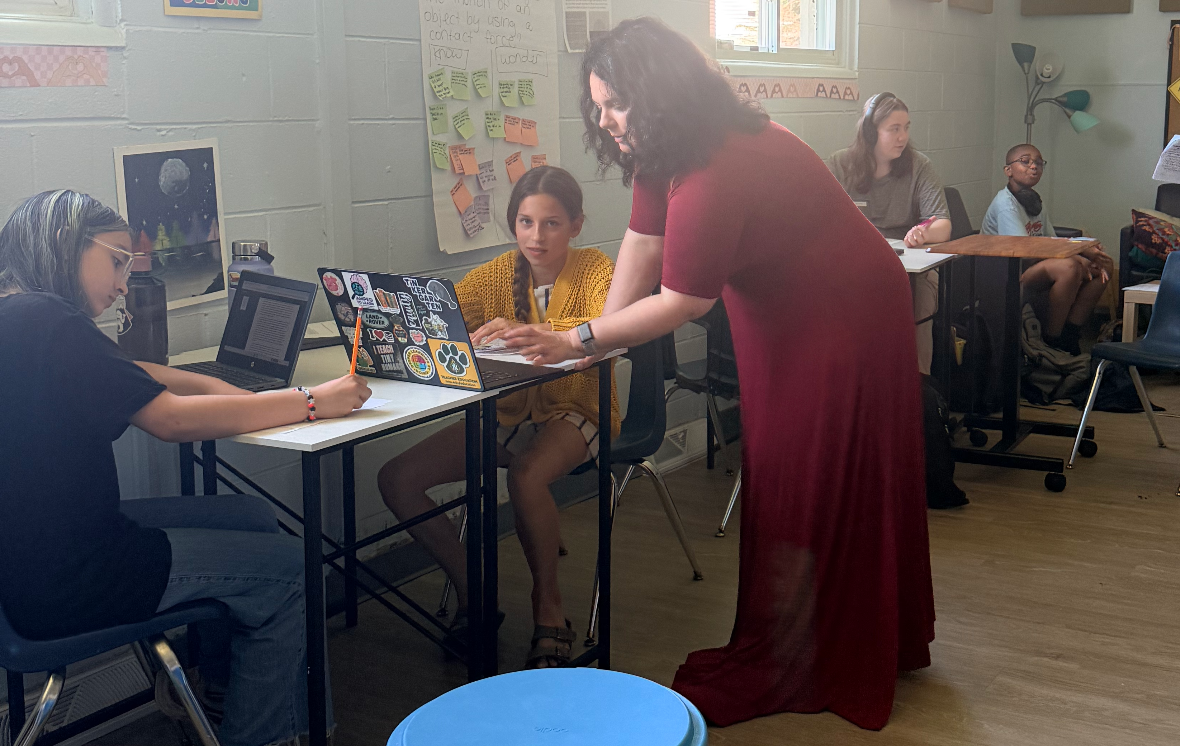
AMPed founder Ann Marie Palazzolo works alongside a student, reflecting her emphasis on individualized support and rigorous learning.
In practice, that means beginning with ambitious learning expectations and then considering the scaffolds, tools, and adjustments individual students need to access the learning.
“You can always take away parts of the project for those that need it, or add supports in,” she said.
She also shared something that clearly drives her work.
“The part that always amazes me is that kids who you wouldn’t expect will rise to the higher expectations and achieve so much more than they would in a traditional model,” she said.
Her perspective reflects what she has experienced with students in her program. And while the circumstances at AMPed differ from those in traditional public schools, the underlying question is relevant to educators in every setting: How do we maintain high expectations while providing different pathways for students to meet them?
The Johnny Cade memorial offered one example. The academic expectations weren’t abandoned because students had previously struggled with reading, writing or anxiety. Students were still asked to engage deeply with a grade-level text, write from another character’s perspective, speak publicly, listen carefully and analyze the work of their peers. The learning was challenging. The environment and supports surrounding that learning helped students participate.
There is an important distinction here. Differentiation shouldn’t mean automatically reducing the intellectual demands of an assignment. It means thoughtfully adjusting the support, process or means of demonstrating learning while preserving the essential learning goals.
That’s not a new idea for public school educators. Teachers across Michigan work every day to make rigorous learning accessible to students with widely varying needs. But the visit reminded me that even when we share a commitment to differentiation, it’s worth examining how consistently our instructional practices and school structures reflect that commitment.
As we continue conversations about strong Tier 1 instruction, literacy across content areas, and equitable access to grade-level learning, perhaps we should also consider whether some of our expectations about how students must learn are unnecessarily limiting their opportunities to demonstrate what they can learn. Rigor doesn’t have to mean every student takes the exact same path.
What Students Say They Need
For an Amplify Voice feature, perhaps the most important perspective isn’t mine or Ann Marie’s.
It’s the students’. Following my visit, I asked Ann Marie to pose a few questions to her students about their experiences at AMPed and what made the learning environment work for them. Their responses offered insight into what they valued about their school experience.
One student described previous school experiences this way: “At previous schools that I’ve gone to, I have been bored and disengaged. I forgot what I had learned there because I didn’t have a reason to remember it, it all sort of blurred together.” At AMPed, the student explained: “I’m learning about things that I find interesting, and actually want to learn more about.”
Another student pointed to the smaller environment and access to individual support: “Everyone has different wants and needs for how school can support them on their learning path, and having a small group helps everyone be able to have their needs met.”
Another put it simply: “The teachers in AMPed want to see you grow and learn.”
And another connected academic support to something equally important: “I got a lot of support here and I met a lot of good people too, I even got another best friend.”
These students weren’t describing a particular instructional program or curriculum. They were describing their experiences as learners. They wanted to feel supported. They wanted learning to be meaningful. They valued relationships with teachers and peers. They appreciated having their individual needs recognized.
Of course, students’ perspectives are only one part of understanding effective teaching and learning. Educators must balance student preferences with academic standards, instructional expertise, and what we know about how students learn. Students may not always know which instructional approaches will be most effective for them. And what a student prefers isn’t necessarily what will produce the greatest academic growth. But that doesn’t make their perspectives any less valuable.
Student voice isn’t about asking students to design their own education. It’s about recognizing that their experiences can provide information we might otherwise miss.
And while the students at AMPed may have arrived with experiences that differ from those of students in other settings, the needs they described are hardly unique. Know me. Challenge me. Support me. Give me a reason to engage. Those ideas don’t belong to any particular school model.
What If We Asked?
As I watched students move through their day at AMPed, I kept thinking about how much Ann Marie knew about each of them. Their academic strengths. Their learning gaps. Their anxieties. Their histories. The experiences that had shaped their relationships with school. And the conditions under which they were most likely to be successful.
A classroom of 15 students certainly makes that level of individualization more manageable. It’s also important to recognize that educators in much larger schools are doing meaningful work to build relationships and respond to individual student needs every day. The question isn’t whether every school can offer the same experience as AMPed. It can’t. The question is whether there are opportunities within our existing schools to better understand the conditions that help students engage, persist, and succeed.
Maybe that means asking students which classroom routines help them focus. Maybe it means examining when students feel comfortable taking academic risks and when they don’t. Maybe it means inviting feedback about what helps students work through challenging assignments instead of giving up. Or perhaps it means paying closer attention to students who are frequently absent, disengaged, or struggling, and asking what their experiences might reveal about barriers we haven’t fully understood.
None of those questions requires abandoning academic expectations or giving students unlimited choices. They require curiosity, intentionality, and a willingness to listen. Ann Marie told me that some students who once avoided school now “grumble when there’s a snow day.” Think about that for a moment. Students who once struggled to attend school are now disappointed when they can’t go.
We can’t attribute that change to any single practice or feature of the program. But it does invite us to consider the relationship between students’ experiences at school and their willingness to engage in learning. And that’s what I appreciate most about Ann Marie’s work. She isn’t suggesting that every school should look like AMPed. Rather, through her experience in special education and her commitment to differentiation, she has created a learning environment that pushes us to consider what education can be when we are willing to question some of our long-held assumptions.
Innovation in education doesn’t always require a new technology, curriculum, or school model. Sometimes it begins with a willingness to examine what we’ve always done and ask whether another approach might better serve students. Ann Marie’s work reminds us that there is value in looking beyond our own settings, learning from approaches that differ from ours, and remaining curious about what might be possible.
As Michigan educators continue working to strengthen literacy, Tier 1 instruction, student engagement, and academic outcomes, we have good reason to examine not only what we teach but also the conditions surrounding that learning. We won’t all have the same resources, flexibility or opportunities to make changes. But we can all remain open to learning from students and considering how their experiences might inform our decisions. And perhaps one of the most accessible places to begin is with the students themselves.
What if we asked our students what helps them learn?
Listening doesn’t obligate us to say yes to everything. It gives us information.
And if we’re serious about amplifying student voice, perhaps the more important question is this:
What might we be willing to reconsider based on their answers?