
At Novi High School, a conversation with a student offered an unexpected window into the opportunities, expectations and relationships that shape learning.
I was looking forward to seeing (Awkward Pause…), a student theatre troupe I had heard about through my colleague Lydia Cadena, who previously taught at Novi High School. Principal Nicole Carter had arranged for me to experience the entire performance in the school’s black box theater.
Before the show began, however, I had an opportunity to talk with a student leader who is part of the troupe. I didn’t realize then how much that conversation would shape what I noticed throughout the rest of my visit.
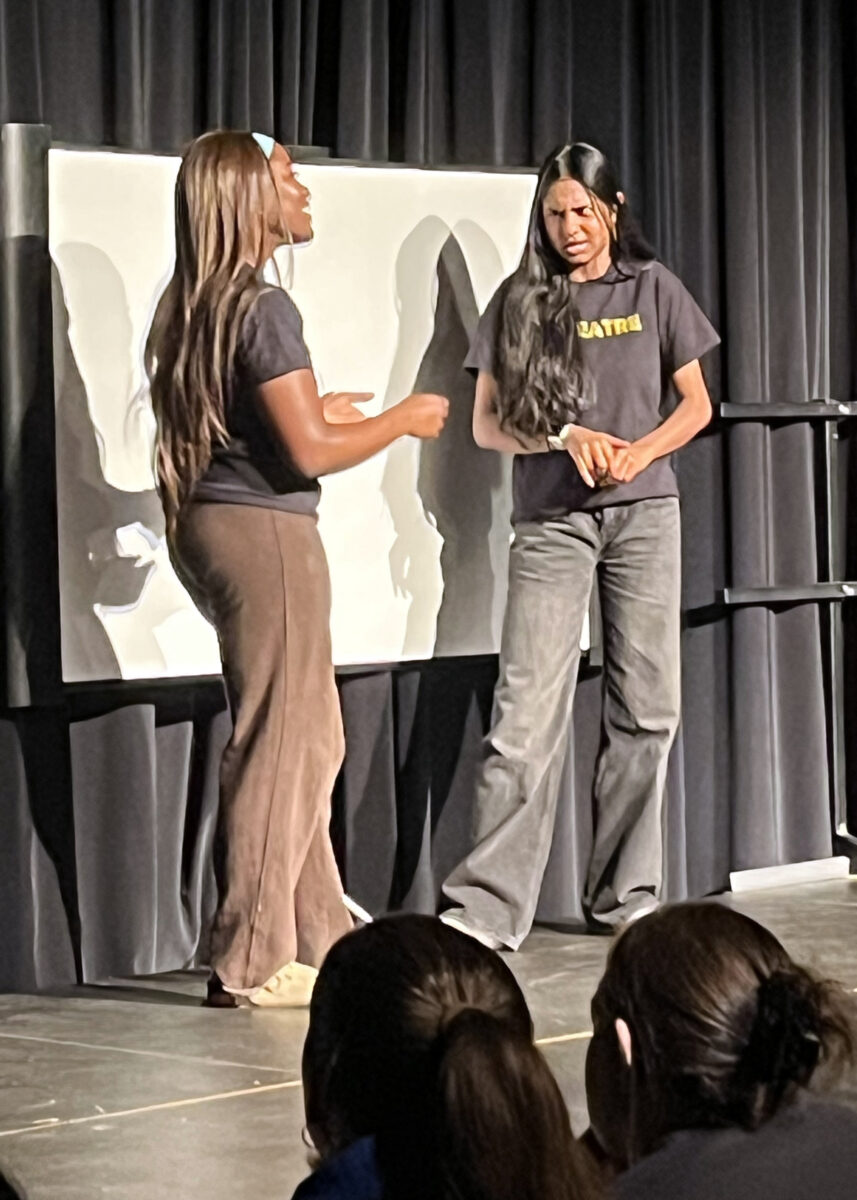
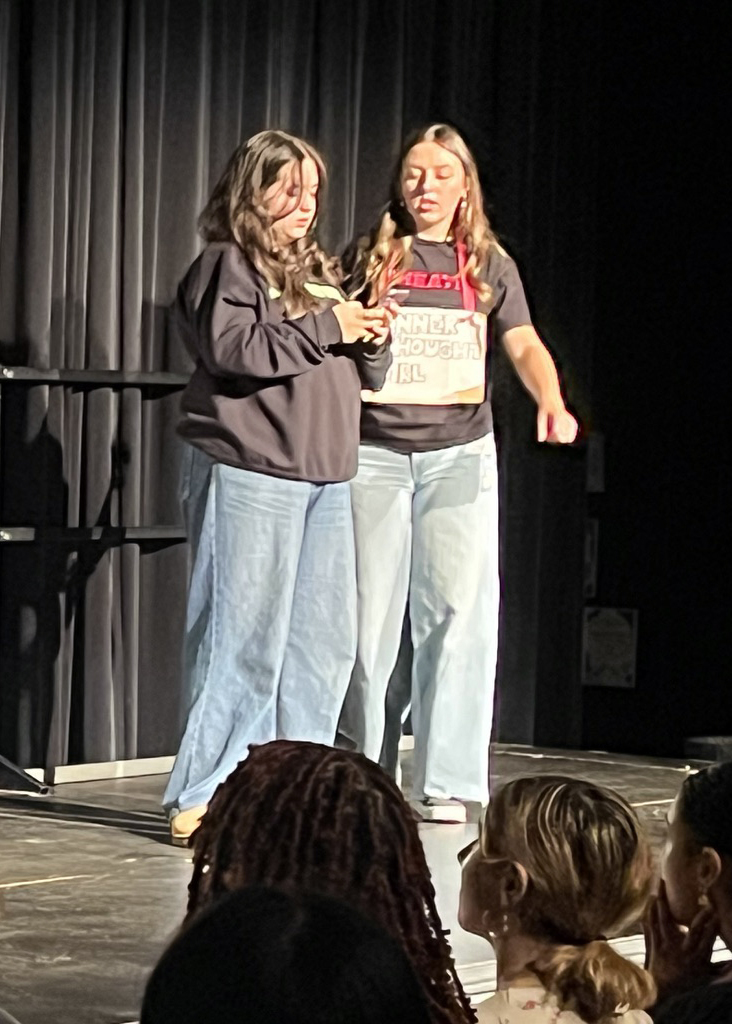
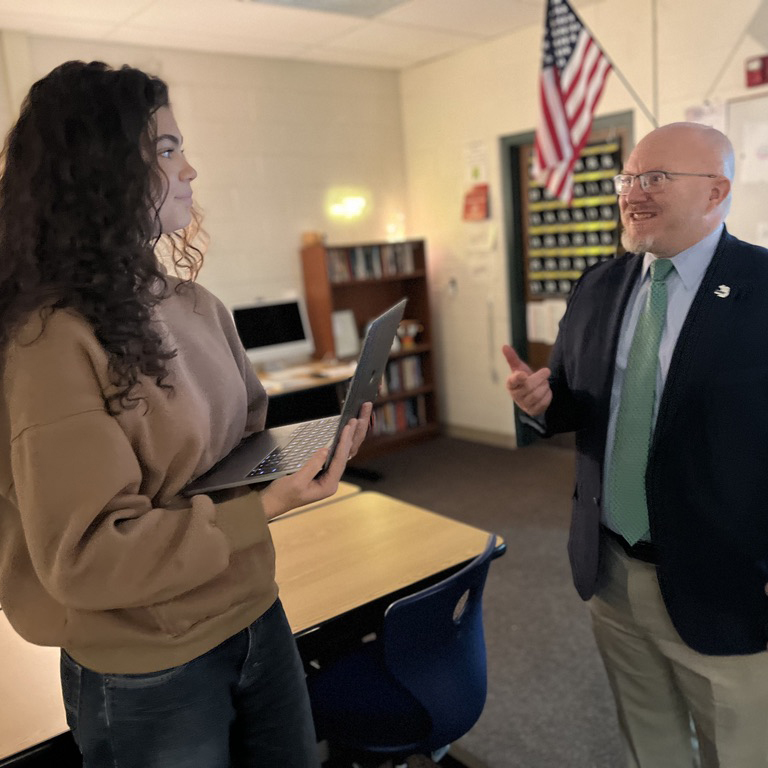
I met Nhyira Agyepong, the student council vice-president, as students were preparing to perform for an audience of freshmen. She explained that (Awkward Pause…) creates original performances about experiences young people encounter in high school, including situations and emotions that aren’t always easy to talk about. The sketches are written, directed and performed by students, with guidance from the adults who support the program.
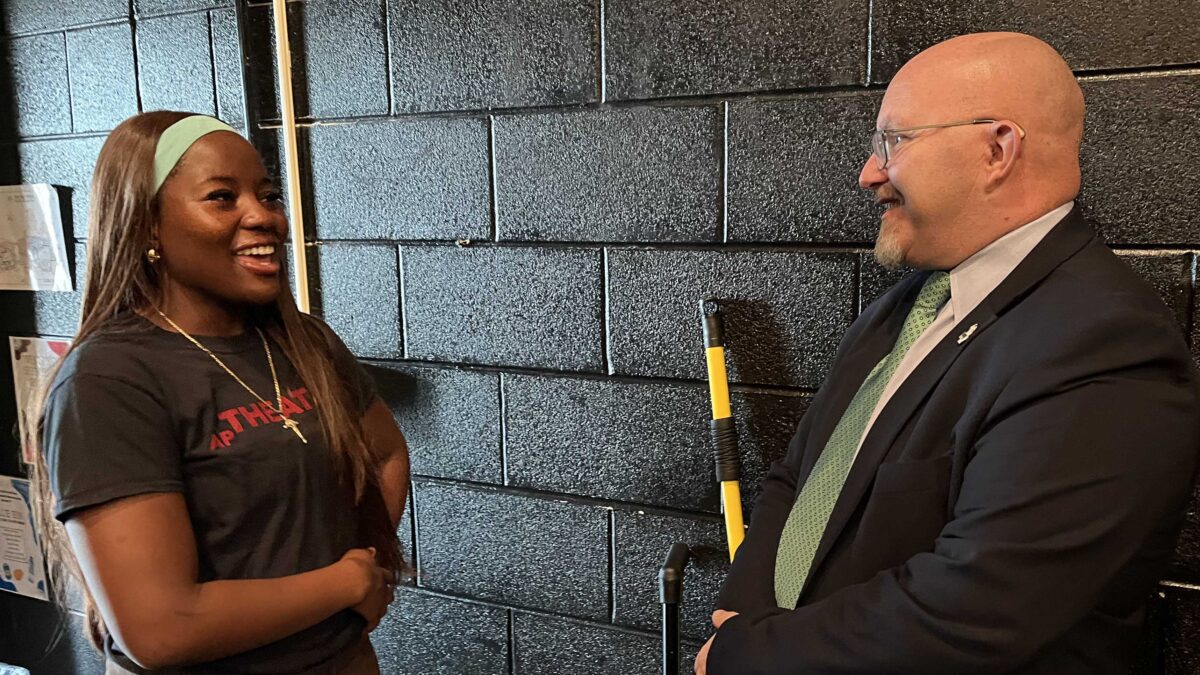
I asked Nhyira what she enjoyed most about being involved in the troupe.
“The people that I meet,” she told me.
Nhyira was involved in sports and student government and had recently been selected homecoming queen. Yet theatre had introduced her to students she might never have gotten to know otherwise.
When I asked what prompted her to join, she described watching an (Awkward Pause…) performance during her sophomore year. Something about what she saw resonated with her. She recognized parts of her own experience in the stories being told and wanted to help create that same opportunity for someone else.
She wanted students sitting in the audience to know they weren’t alone.
I was struck by how naturally she connected her own experience with what she hoped to make possible for others.
As we continued talking, I learned more about the responsibility students assume through (Awkward Pause…). They identify topics, develop scripts, direct scenes and bring their ideas to life on stage. Their work also goes through a review process with theatre director Heather McKaig, Assistant Principal Michelle Eathorne, and sometimes Principal Carter, particularly when the subject matter is sensitive.
I was curious how students navigated that balance between creative freedom and responsibility.
Nhyira explained that when you’re immersed in creating something with your peers, it can be easy to focus on what you want to communicate without fully considering how someone else might experience it. She described times when adults helped students reconsider an idea or approach a difficult topic differently.
“Everybody has a special point of view,” she said.
I appreciated how much responsibility students assumed as they explored meaningful issues, made decisions, considered different perspectives and learned through the process.
Eventually, I asked Nhyira about Nicole.
She spoke warmly about her principal’s presence at student activities, sporting events, student council and homecoming. She admired Nicole’s leadership and appreciated the example she set as a female principal.
“To know her is to love her,” she said.
When I asked what made that relationship personal, Nhyira shared that she had gone through a difficult period during high school, struggling with things she wasn’t quite ready to discuss openly. Nicole had noticed that something wasn’t right and reached out to check on her.
It was a simple act of attentiveness, but one that had clearly meant a great deal to Nhyira. She had already been drawn to (Awkward Pause…) after watching a performance. Her conversation with Nicole helped her take the next step and try out for the group, where she found another way to express feelings and experiences she might otherwise have kept to herself.
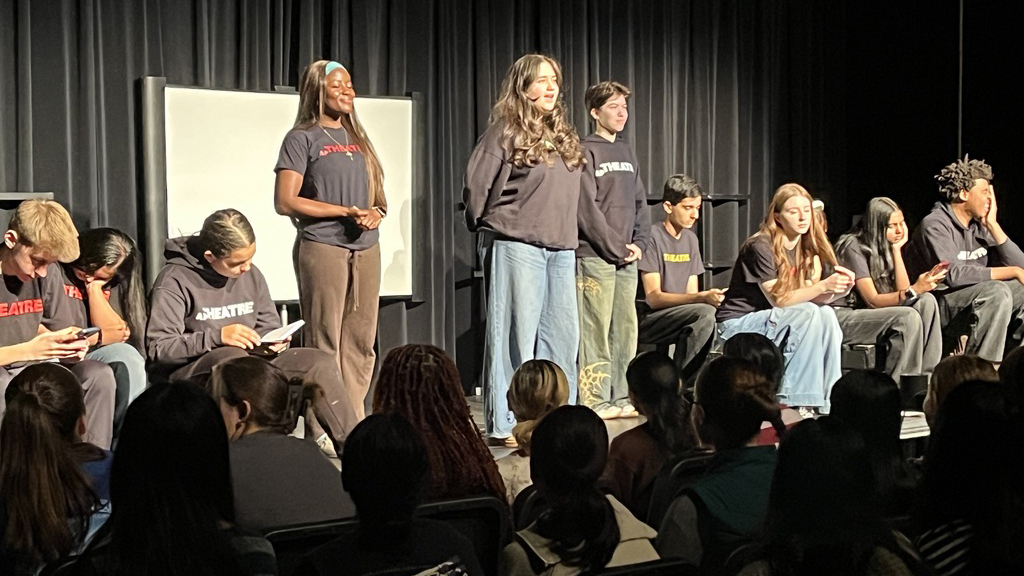
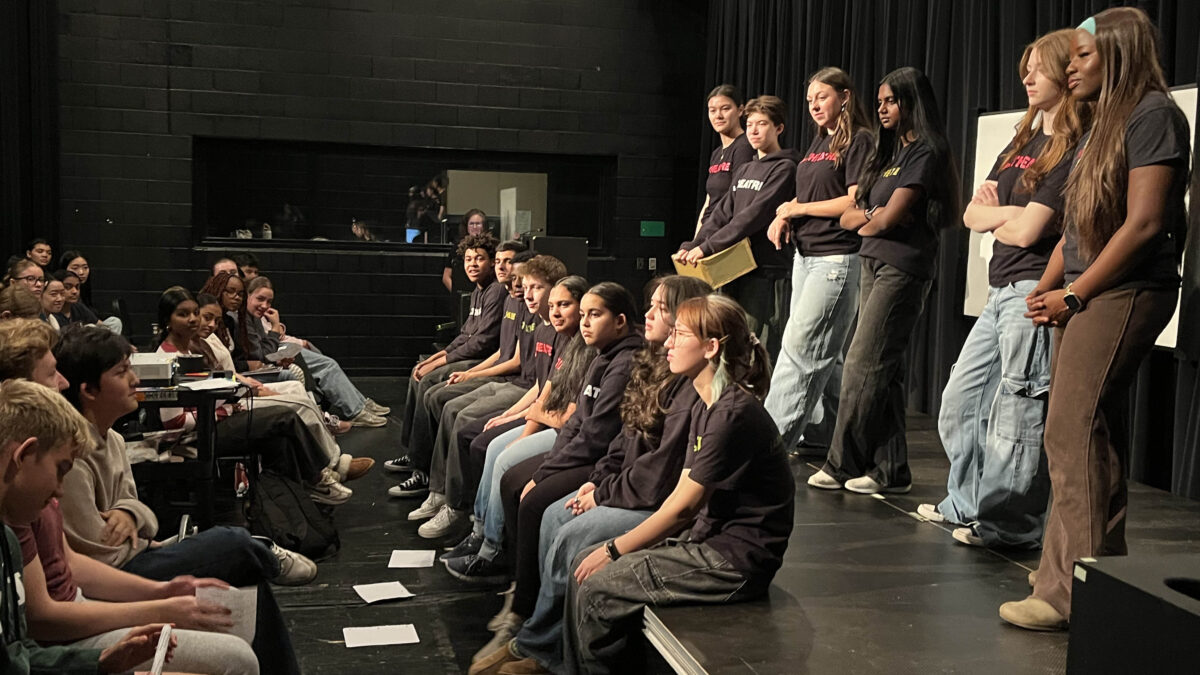
A few minutes later, I watched (Awkward Pause…) take the stage.
Heather and a student director, Kai Chopra, introduced the performance and explained its purpose. The students then brought their original scenes, and those written by past troupes, to life for an audience of freshmen who had come from their English classes.
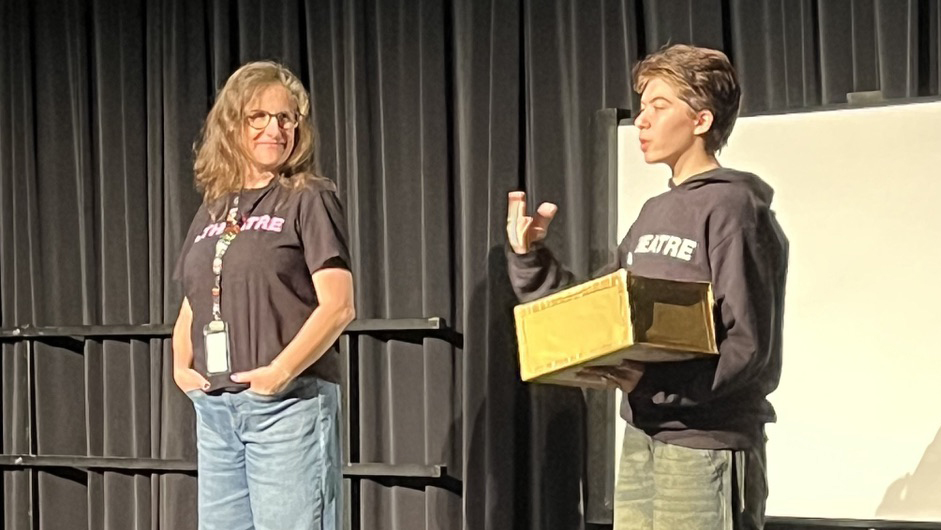
Some pieces drew laughter. Others explored situations that were more difficult to navigate. Over two decades, students developed the material themselves, and the troupe would invite feedback from the audience afterward.
As I watched, I thought about what Nhyira had told me.
For some freshmen, the performance might simply be an entertaining break from their regular class. Others might recognize something they were experiencing themselves, or begin to understand what a classmate was going through.
And somewhere in that audience might be another student like Nhyira, watching something that would stay with them long after the performance ended.
The Challenge of Knowing 2,149 Students
Novi High School is a large, academically accomplished school. Its 2,149 students have access to 22 Advanced Placement courses, 15 International Baccalaureate courses, and more than 55 clubs and activities. Across the district, students speak 73 languages and dialects, reflecting the diversity of the community Novi serves.
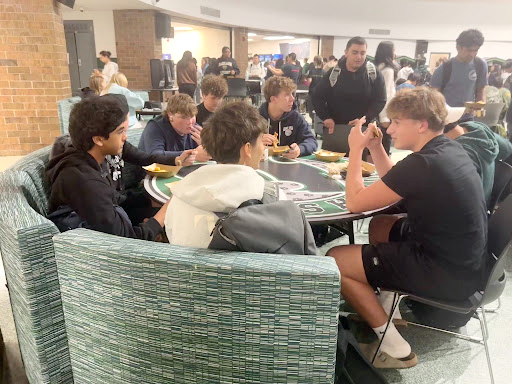
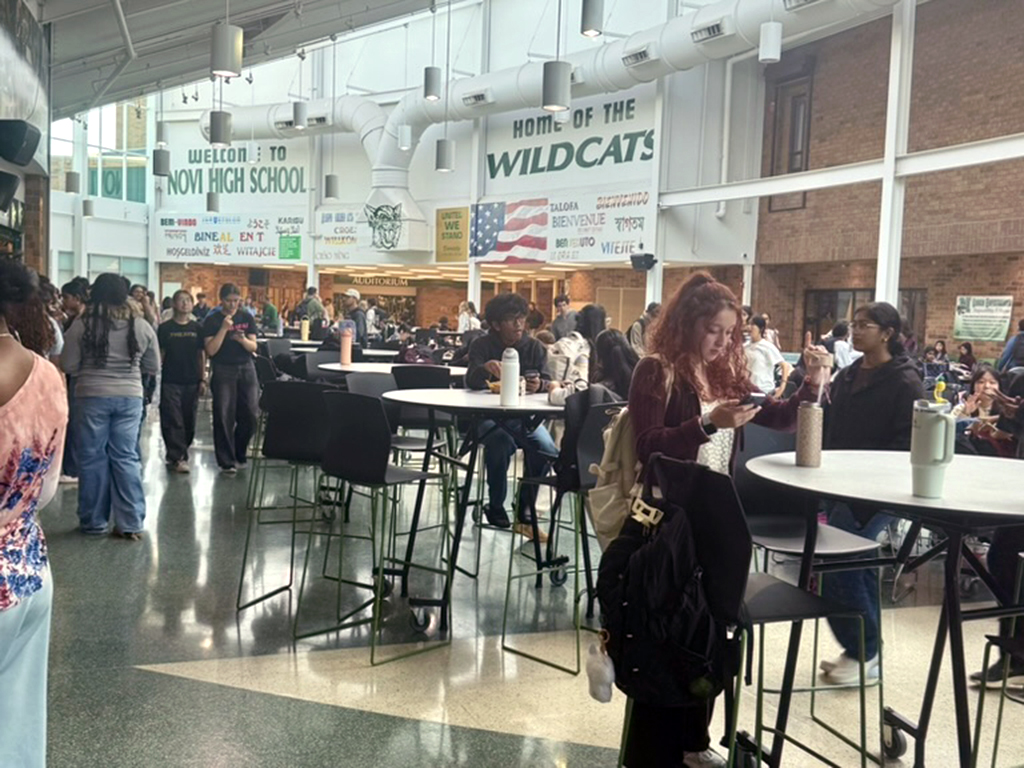
As Nicole and I continued our visit, I found myself thinking about how the opportunities available at Novi translated into students’ everyday experiences, both inside and outside the classroom.
Making Thinking Visible
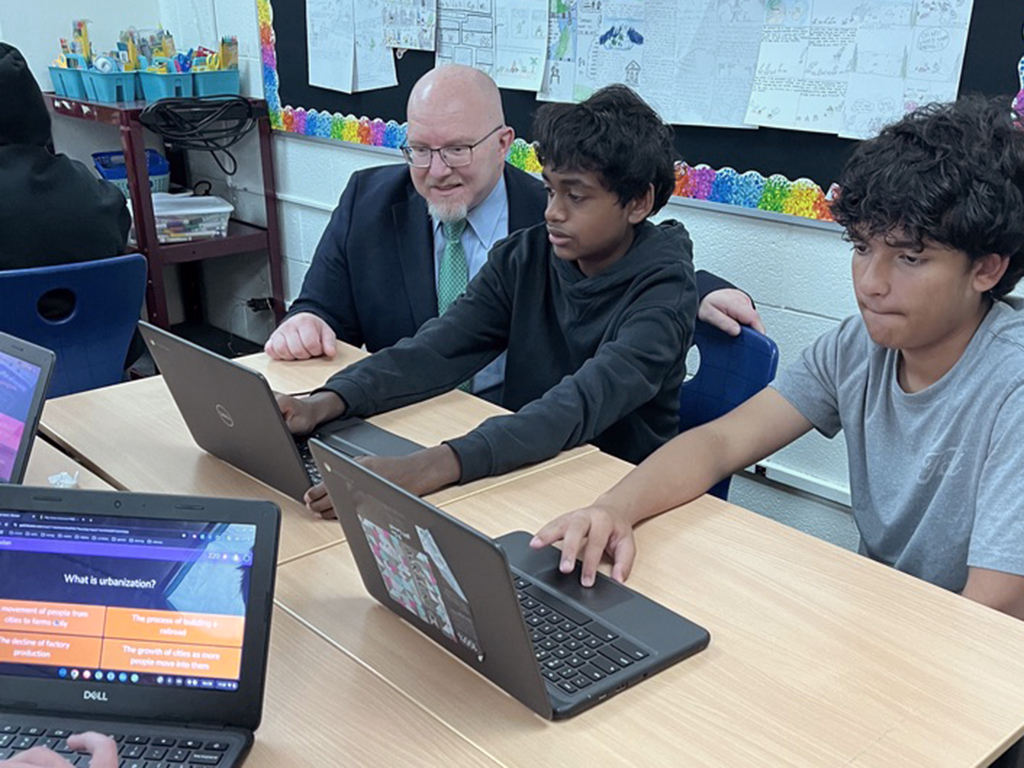
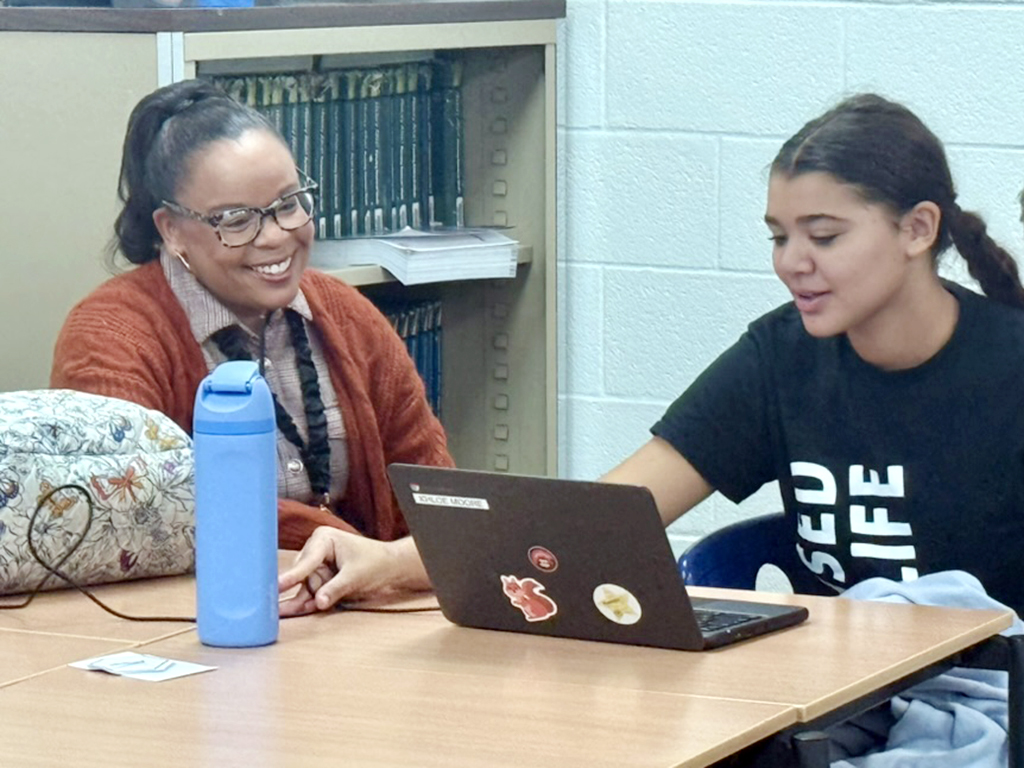
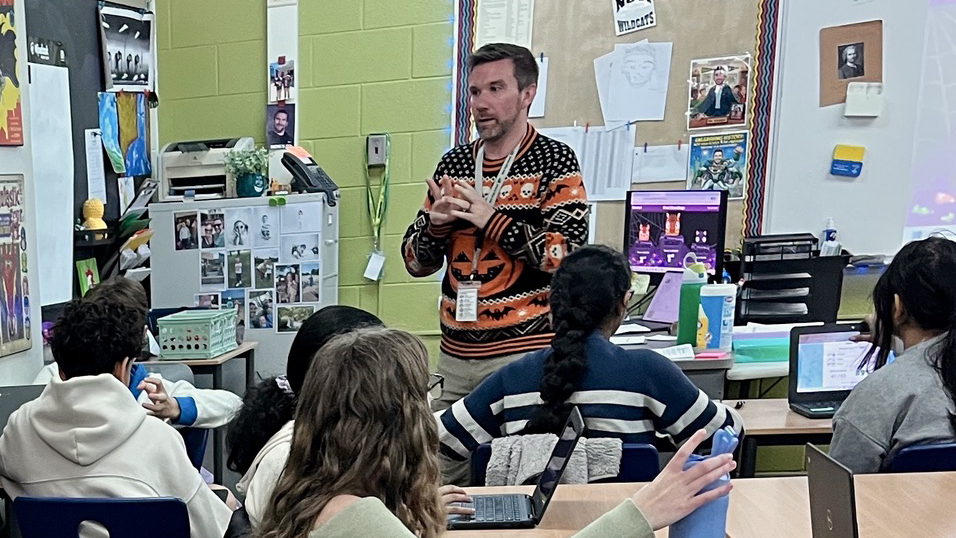
Our next stop was Jeff Madigan’s U.S. history classroom, where students were reviewing industrialization, inventions and the Progressive Era in preparation for a test the following day.
The room was active. Students were talking with classmates, recalling information, comparing answers, and enjoying some friendly competition as they worked through the review. Jeff had designed the warm-up to activate students’ prior knowledge before moving into an activity that would challenge them to think more deeply about what they knew.
As the review concluded, Jeff introduced a visible thinking routine designed to help students explore connections among historical people, events and ideas. He talked about the importance of making students’ thinking visible, creating opportunities for them to explain not just what they knew, but how they understood it.
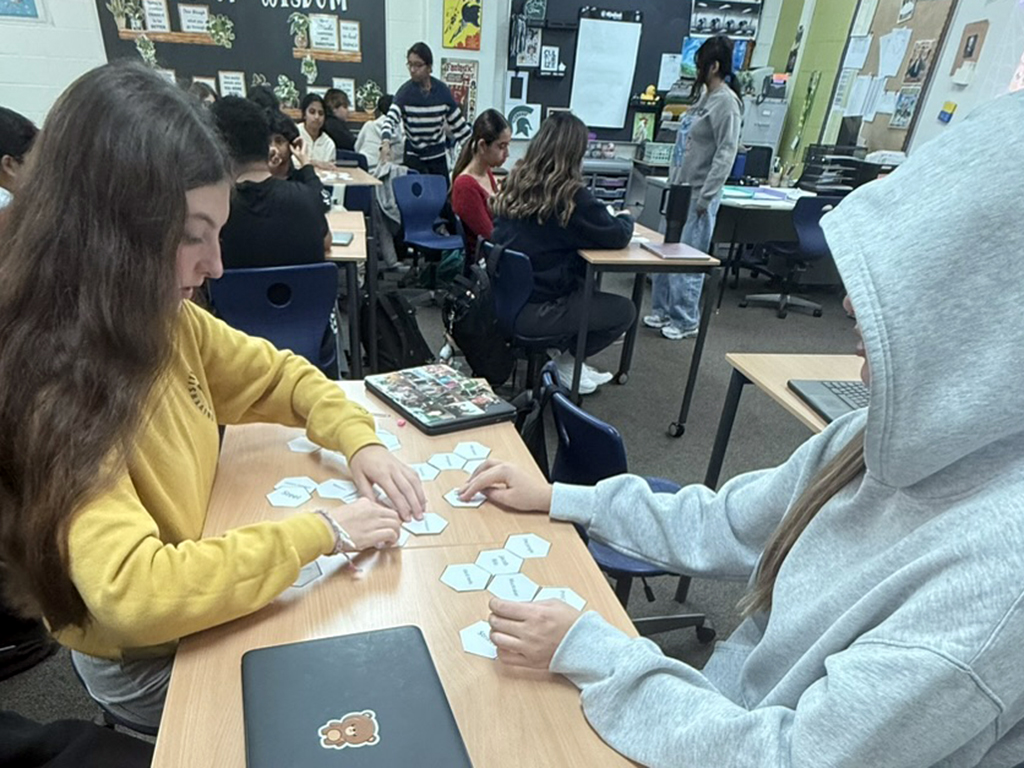
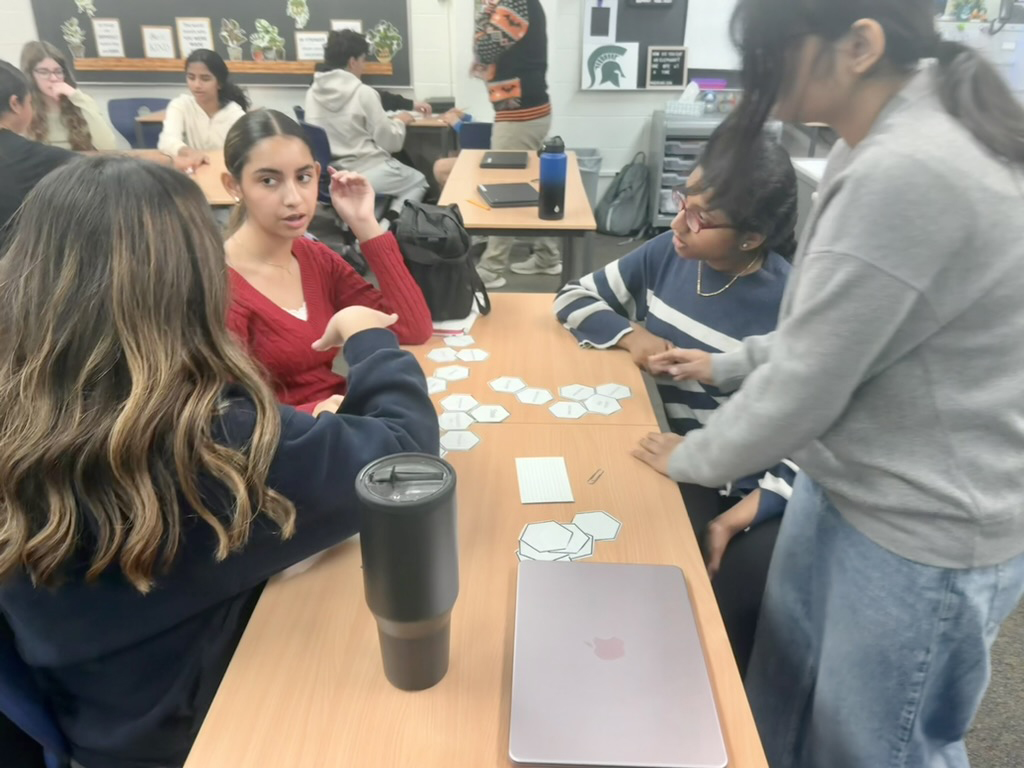
Students received hexagonal cards, each containing a person, event or concept from the unit. Their challenge was to arrange the cards so that touching sides represented meaningful historical connections. Jacob Riis might connect to muckraking, for example, with additional relationships extending outward as students explored how the ideas fit together.
As students began working, we observed them move cards, consider different arrangements and discuss possible connections with their classmates. Some readily offered suggestions, while others listened, examined the possibilities or contributed as the conversations unfolded.
Jeff explained that students would also be asked to explain and defend their connections. The progression was intentional, moving from activating prior knowledge to examining relationships and articulating the reasoning behind their choices.
What struck me was how differently success looked across the two activities. During the opening review, students were working to recall information quickly and accurately. With the hexagonal cards, they had to decide which relationships mattered, consider alternatives and eventually explain why they had made those choices. There wasn’t necessarily one correct arrangement. The quality of their reasoning mattered as much as the connections they identified.
As Nicole and I continued our visit, we talked about what draws our attention when we walk into classrooms. It’s easy to notice whether students are following directions, participating, or enjoying an activity. Those observations matter, but they don’t necessarily tell us what students are thinking or learning.
The more revealing questions are about the intellectual work students are being asked to do. Are they recalling information, examining relationships, making decisions, considering alternatives or explaining their reasoning? And what opportunities do they have to make that thinking visible?
The distinction between the opening review and the hexagonal activity wasn’t simply between having fun and learning, or between being busy and thinking. Both served a purpose within an intentional instructional progression, moving students from recalling information to examining relationships and explaining their reasoning.
By asking students to explain and defend those connections, the teacher could gain insight into how they reasoned, the relationships they recognized and how they were making sense of the material.
Telling the Story of a School
In the yearbook classroom, students were developing this year’s publication around a Netflix-inspired theme, complete with episode-style layouts, graphics, and design elements that reflected the streaming platform.
Two students from Brazil showed me the designs they were developing. The creativity and attention to detail were evident in their work, but our conversation soon moved beyond the yearbook to their experiences at Novi.
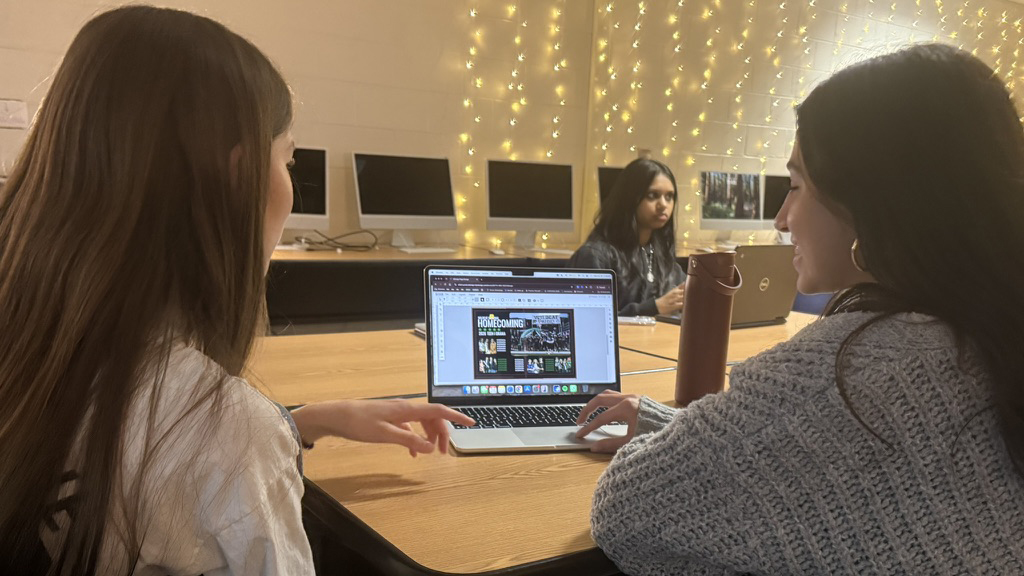
One described the challenges of transitioning to a new school, learning in another language and finding her place in an unfamiliar environment. She recalled patient, supportive teachers, friendships that helped her adjust, and opportunities to become involved in the school community.
She particularly appreciated Novi’s diversity and the opportunity to meet classmates whose backgrounds and experiences differed from her own. An interest in design, sparked in another class, had eventually led her to yearbook, where she was now helping tell the story of the school she had worked to find her place in.
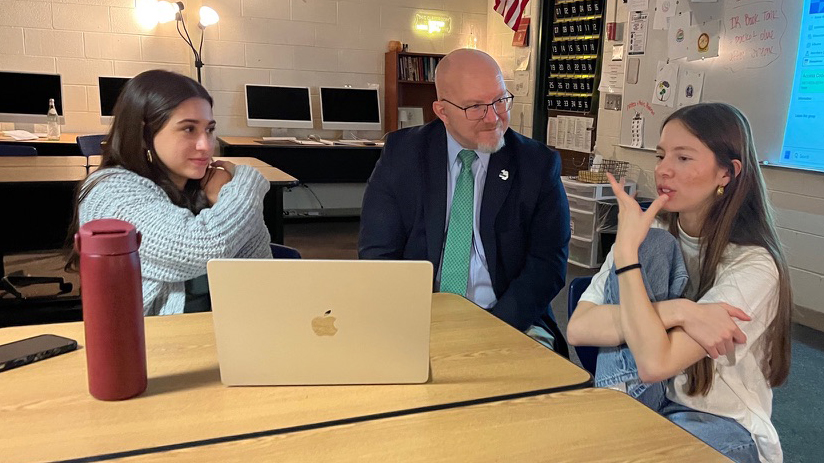
As the conversation continued, the two students discovered something they hadn’t known about each other, despite working together in the same classroom. Both had participated in Oakland Career Tech Center.
It was a small but meaningful moment. Two students helping tell the story of their school were still discovering connections within their own community.
Creating a yearbook for more than 2,100 students involves gathering photographs, interviewing classmates, writing stories and making decisions about whose experiences to capture. It also presents the practical challenge of identifying students across hundreds of photographs.
A representative working with the yearbook program demonstrated an AI-assisted feature designed to identify students in photographs and help build the book’s index. One student raised a practical question. How could she verify that the system had identified someone correctly if she didn’t know every student in the school?
Technology could help students identify faces across hundreds of photographs, but ensuring accuracy still required human judgment.
The indexing feature also offered another way to examine the publication.
Most of us remember opening a yearbook and searching the index for our names, curious about where we appeared and how often. For the students creating the publication, that same information could help answer a more consequential question.
Who is represented throughout the publication, and whose experiences might still need to be captured?
By examining how frequently classmates appeared, students could look beyond individual pages and consider whether their publication reflected the broader school community.
Of course, photographs and names tell only part of a school’s story. Understanding the experiences behind them requires curiosity, conversation, and a willingness to follow a story beyond where it first began.
Another yearbook student was doing exactly that.
She had interviewed a senior volleyball captain about the team’s season. During the conversation, the captain shared how the team had worked with a sports psychologist to strengthen both performance and mental health. What began as a story about volleyball opened the door to a larger question about the mental preparation, resilience and well-being of student-athletes.
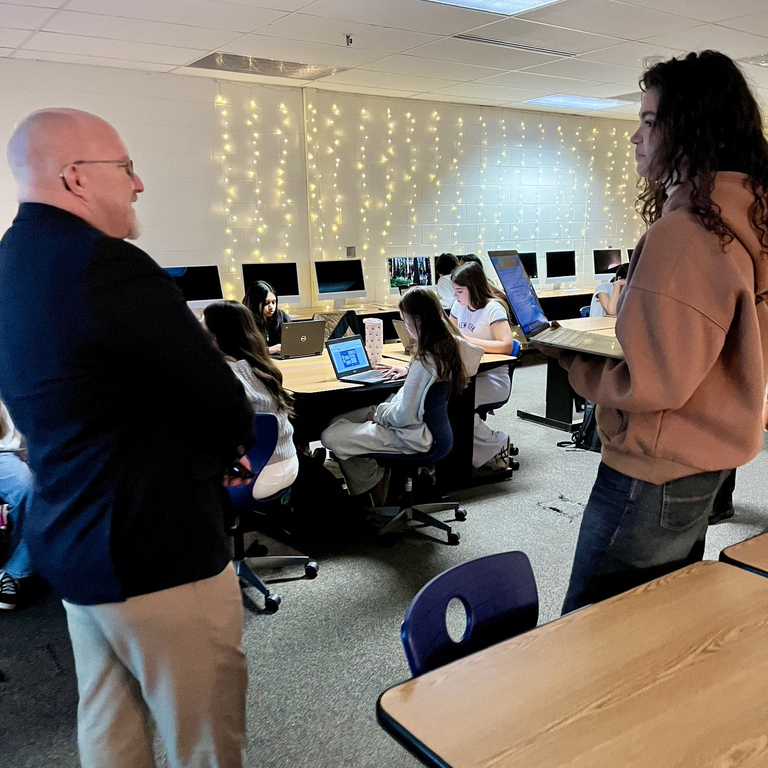
The student was now considering how to explore the topic more broadly, including conversations with other athletes, coaches and school counselors. As Nicole joined the conversation, she and the yearbook teacher helped the student think through where the story might lead and whose perspectives could deepen her understanding.
The student wasn’t simply gathering material to fill a page. She was learning to recognize a story worth pursuing, ask better questions and consider experiences that might otherwise go unnoticed.
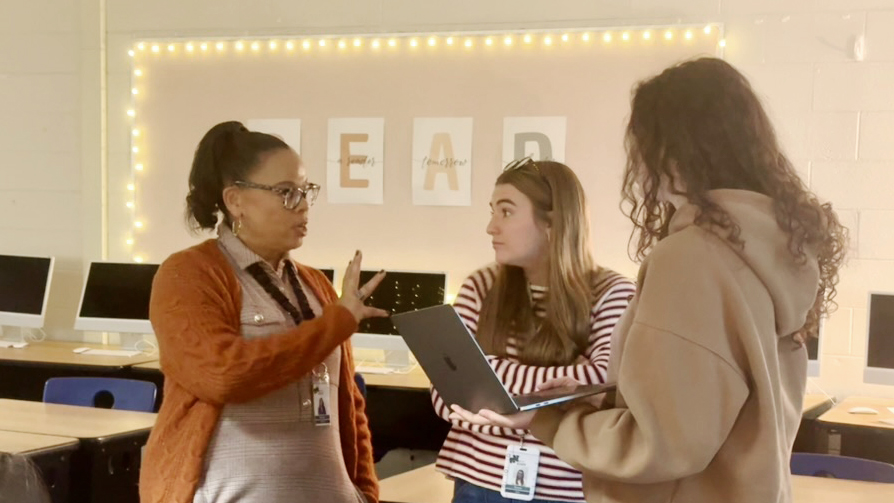
What was happening in that classroom extended well beyond producing a yearbook. Technology could help organize photographs and identify faces, but it was the students’ curiosity and conversations that helped them look more closely at their school community, whose experiences were represented, and whose stories might still be missing.
And through the work of telling their school’s story, the students were developing connections and becoming part of that story themselves.
The Decisions Behind the Experience
Throughout the morning, Nicole and I talked about the work of leading Novi High School, much of which would be familiar to any secondary school principal.
The building itself is preparing for significant changes. Nicole shared plans for a new Innovation Hub, improvements to student services, and a redesigned main entrance intended to make the school easier for students, families, and visitors to navigate.
I could appreciate that last improvement. Finding the correct entrance had been a small adventure when I arrived.
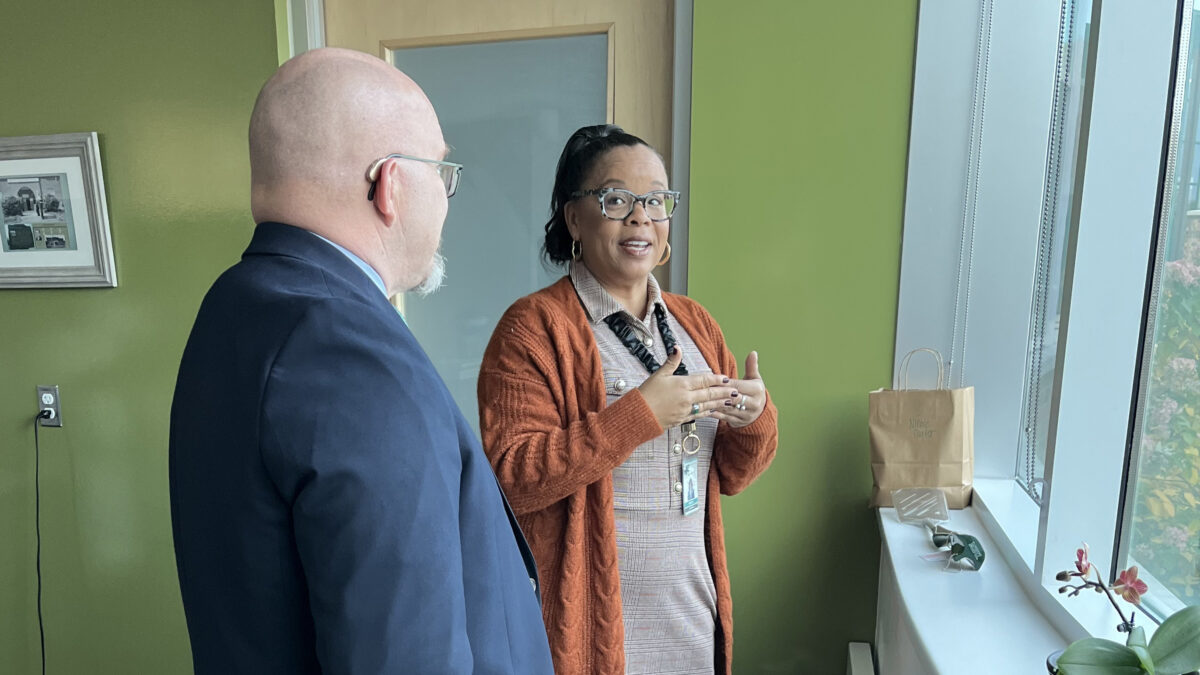
We also talked about changes that aren’t as visible as construction.
Novi is working through a transition to a four-point grading scale, including conversations about consistent expectations, reassessment, and how grades communicate student learning. Nicole also described adjustments to the school’s advisory structure, creating more continuity by connecting students with their fifth-period teachers on Mondays and Thursdays.
Mondays generally provide opportunities for social-emotional learning, belonging and schoolwide activities. Thursdays offer time for academic support, collaborative work and making up assessments.
We talked about students feeling overwhelmed by coursework and assessments, the challenge of balancing academic expectations with student well-being, and the importance of communicating with families as instructional practices evolve.
There were also conversations about staffing, organizational changes and the many competing demands on a principal’s time and attention.
I appreciated Nicole’s openness about the decisions she was navigating. Each involved considerations that weren’t always apparent from the outside. What might seem like a straightforward change to a grading scale or schedule could affect teachers’ work, students’ experiences, and families’ understanding of what was happening in school.
And those decisions rarely arrive one at a time.
As we moved through the building, I also noticed how frequently Nicole connected with students. She stopped to ask questions, check in, offer encouragement and connect with people along the way.
Some interactions lasted only a few moments, but they reminded me of what Nhyira had shared earlier. When she was going through a difficult time, Nicole had noticed and reached out. Their relationship had developed through the many places their paths crossed, well beyond the principal’s office.
I found myself thinking about the connection between those individual interactions and the larger decisions we had been discussing.
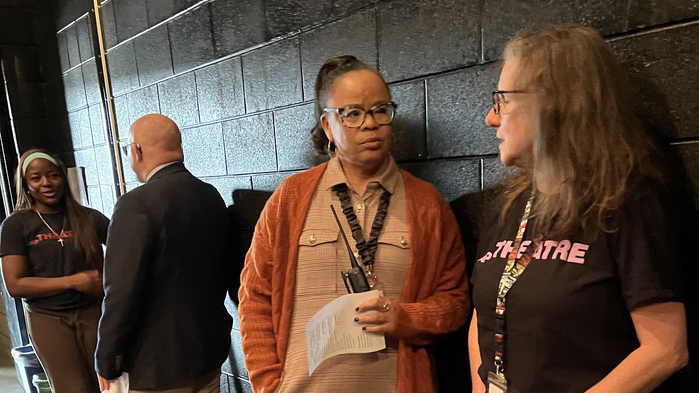
A grading system influences how students understand their learning. An advisory schedule shapes when and how students connect with adults and receive support. Decisions about facilities, staffing, and resources affect the opportunities available to students and the conditions in which teachers work.
Those decisions may seem far removed from the individual experiences I had witnessed throughout the morning. Yet they help shape whether students have opportunities to be known, challenged, supported and heard.
The decisions help shape the experiences students have, while those experiences give meaning to the decisions.
What I Carried Away
Near the end of my visit, Nicole and I found ourselves talking about technology, artificial intelligence, and the changing ways students learn and communicate.
I see tremendous possibilities in these tools. We had just witnessed some of them in the yearbook classroom, where students were using technology to organize photographs, develop stories, and document their classmates’ experiences.
But as we talked, my thoughts returned to the students we had met and what their experiences had revealed about learning.
In the history classroom, students were exploring relationships among historical events and making their thinking visible. In yearbook, students were discovering connections with classmates and following stories beyond where they first began. Through (Awkward Pause…), students were finding opportunities to express themselves, engage their peers and build relationships.
Each experience offered something beyond the immediate assignment, activity or performance. Students were learning about themselves, one another and the community they shared.
I thought again about Nhyira, the opportunities she had found through (Awkward Pause…), and the relationships that had helped her find her place at Novi.
Sometimes, in the middle of everything else happening in a school, a principal notices that a student needs someone.
Novi High School has much to celebrate, from its academic accomplishments to the breadth of opportunities available to students. What I appreciated most during my visit was hearing from the young people experiencing those opportunities and discovering what they meant to them.
I arrived at Novi expecting to learn about a school, its programs and the leadership of a colleague.
I left thinking about the young people I had met, the stories they had shared and the relationships that gave those experiences meaning.