
AI transcription tools are already in our classrooms, often arriving one principal at a time and well ahead of district policy. That is where the conversation has to start. A classroom recording is never just a recording of the teacher. It captures students’ voices, names and more. That brings FERPA, COPPA, and Michigan’s evaluation law into play, and the tool you choose and how you use it determine whether you stay on solid ground.
I recently put together a white paper for MASSP and our work around 5D/5D+ Teacher Evaluation Framework Training as the Five-Star PIVOT tool added a feature for uploading transcripts.
This article offers the short version: What you need to know to use these tools responsibly and why getting it right can make you a better instructional leader.
What every principal needs to know about compliance
Student privacy law applies, but not always the way people assume. Whether a transcript becomes a student education record under FERPA depends on how it is maintained and what it is used for, not simply on what it contains. Some uses carry far less risk than leaders fear, while others carry more than they realize. In elementary and middle school classrooms, COPPA raises the stakes further. Under the 2025 amendments to the COPPA Rule, fully in effect since April 2026, both audio of a child’s voice and voiceprints count as personal information.
Teachers have a stake too. Michigan’s evaluation law, MCL 380.1249, requires observation evidence to be documented and maintained. Once a transcript becomes part of that formal evaluation record, it is clearly an education record under FERPA. It also raises fair questions for teachers about accuracy, access, and how long that record lives.
Security credentials are not the same as compliance. Many vendors advertise SOC 2 or ISO 27001 certifications. Those are good signs about how a company protects data, but they do not tell you whether the vendor will sign a student data privacy agreement, how long it keeps your recordings, or whether it uses them to train its models. Security, governance, and legal compliance are three separate questions, and each one needs an answer.
Hardware can slip past your safeguards. Most districts have a process for vetting software. Far fewer have one for a small recording device purchased with a credit card. One popular AI recorder, PLAUD, offers strong technical security but offers no education-specific data processing agreement, publishes no FERPA statement, and says in its privacy policy that it does not aim to serve minors. Until that changes, it belongs only in adult-only conversations, even though many administrators already carry one into classrooms.
Recordings can become public records. Under Michigan’s FOIA, a recording or transcript the district prepares, uses, or keeps as part of official business is generally a public record, whether it captures a classroom or a staff meeting. Student information is redacted under FERPA, but discussion of staff performance often is not protected. Record with the assumption that someone outside the room may one day read the transcript, and set a clear retention practice.
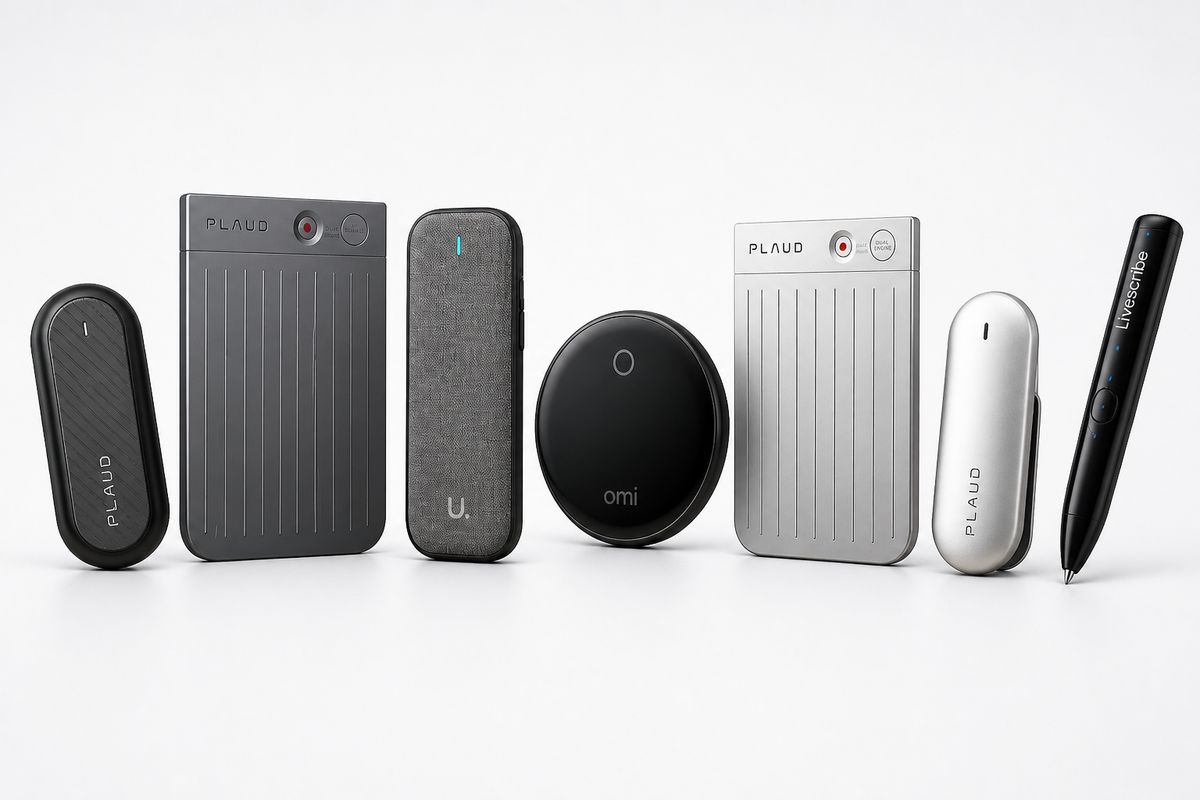
This image above is from 7 Best AI Note Taking Devices in 2026: Top Smart Recorders, Wearables, and Pens Compared
Four questions that keep you on solid ground
Rather than asking whether a tool is “approved” in the abstract, look at the specific way you plan to use it:
- What is actually being kept? Audio, a full transcript, a summary or nothing at all after processing?
- For how long? Is there a clear retention period and can you delete on demand?
- Who can access it? Just you, your team, the vendor or anyone with a shared link?
- What is it really about? Is the record primarily about a student or primarily about teacher practice?
As the white paper puts it, compliance is not a property of the tool. It depends on the tool, the agreement, the context and what you do with the data afterward.
The white paper recommends a phased approach. Begin with post-observation debriefs and coaching conversations between adults, where no student voices are captured. Next, consider grades 9-12 observations, where COPPA no longer applies but a signed data processing agreement is essential. Treat K-8 classroom transcription as the highest-stakes scenario and involve district legal counsel before any deployment.
Why getting this right improves your work
Compliance is not the finish line. It is what clears the way for the real payoff: better observations and better feedback.
Picture a classroom observation. You set your phone on the corner of a desk, tap a button and the words in the room are captured for you. That frees you to focus on what no recording can hear: which students lean in and which ones drift, who is talking and who has gone quiet, how the room responds when a question lands. When you walk out, a full transcript is waiting to sit alongside your own evidence.
- Presence over scripting. When you are not racing to type every word, you can record what you see: who is engaged, who is not and how participation is spread across the room.
- Richer evidence. A transcript captures student discourse, questioning patterns, and wait time with an accuracy no set of handwritten notes can match.
- Better feedback conversations. Teachers respond differently when feedback is grounded in what was actually said rather than what we remember.
- Time back. Meeting notes, summaries and follow-up items that once took an evening can be ready in minutes.
Augment, don’t supplant
A transcript is a record of what was said. It is not a record of what happened. It cannot tell you whether the same four students answered every question while the rest of the room sat quietly, or whether a student who never spoke was deeply engaged in the task.
That evidence belongs to the observer. If you are in the room watching those interactions, you should be capturing them: participation patterns, student engagement, how the class responds to an instructional move. Often that is the evidence that tells you whether a handful of students are engaged or all of them are.
The goal is to stop scripting, not to stop observing. Let the tool hold the words so your attention and your notes can go to the students. The strongest observation record combines both: the accuracy of the transcript and the judgment of the evaluator.
What you will find in the full white paper
The complete guidance is built to be practical for busy leaders, whether or not you have a background in privacy law. It includes:
- A plain-language overview of the compliance landscape, including FERPA, the 2025 COPPA amendments, CIPA, MCL 380.1249, and the TAKE IT DOWN Act
- A risk table comparing observation contexts, from K-5 classrooms to staff meetings
- A color-coded comparison of 11 transcription tools, from Microsoft Teams and Zoom to Otter.ai, Fireflies.ai, and PLAUD, with a profile of each
- Guidance on separating security certifications, governance and legal compliance
- A four-question use-case framework and a phased implementation plan
- A vendor vetting checklist adapted from Oakland Schools’ Digital Tools Vetting Rubric, organized as three sequential gates: acceptable use, privacy and security, and contracts
- Michigan-specific steps, including checking the SDPC registry of approved vendors
- A one-page decision guide to use before approving any transcription deployment
Why this matters now
Adoption is moving faster than policy, and principals are often the ones who set the norms everyone else follows. When we are thoughtful about these tools, we model the AI literacy we hope to build in our staff and students, protect the trust families place in us, and show teachers that new technology in their classrooms will be used carefully and fairly.
The short version
AI transcription can make you a sharper, more present observer, but only when it is used compliantly and alongside your own eyes, not in place of them.
- Know the law. FERPA, COPPA, and MCL 380.1249 all apply, and security certifications alone do not make a use compliant.
- Judge the use, not just the tool. Ask what is kept, for how long, who can see it, and whether it is about a student or teacher practice.
- Start with adults. Debriefs and coaching conversations first, high school next, K-8 only with legal counsel.
- Augment, don’t supplant. Let the tool capture the words while you capture who is engaged and how.
Read the full white paper here.
This guidance is intended to support informed decision-making and is not legal advice. Leaders should consult district policy and legal counsel for specific situations.