
Inside North Ed’s Evolving Approach to Career Tech Teaching and Learning
What makes a learning opportunity worth leaving home before 5:30 each morning, five days a week?
For one sophomore I met during my recent visit to North Ed Career Tech, the answer is the Engineering Academy, a two-year program that brings together engineering, English, mathematics and science. Students apply what they learn across disciplines through work involving computer-aided design, construction, machining, electrical systems and robotics.
As the only four-hour program at the center, the Engineering Academy operates differently from the center’s other 22 programs, which run for two or two and a half hours. Academy students must arrange their own morning transportation. Her father drives her an hour to the center, dropping her off around 6:30 so he can get to work by 7:00, even though her classes don’t begin until 7:30. At the end of the program, she boards a bus for the nearly hour-long trip back to her home school.
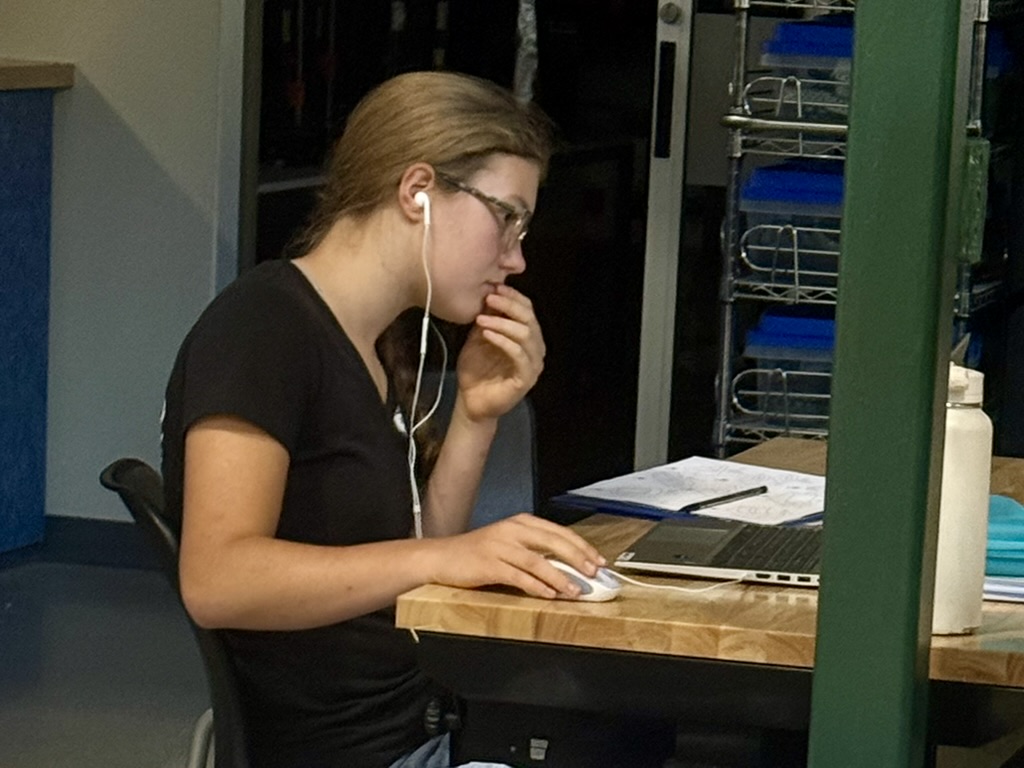
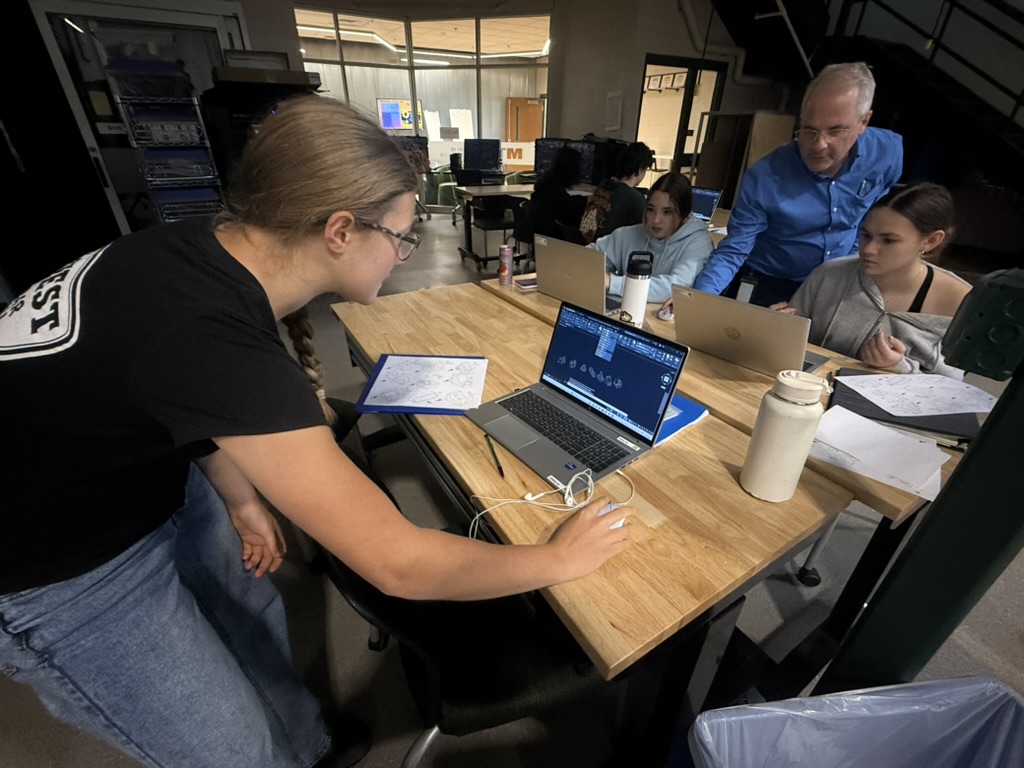
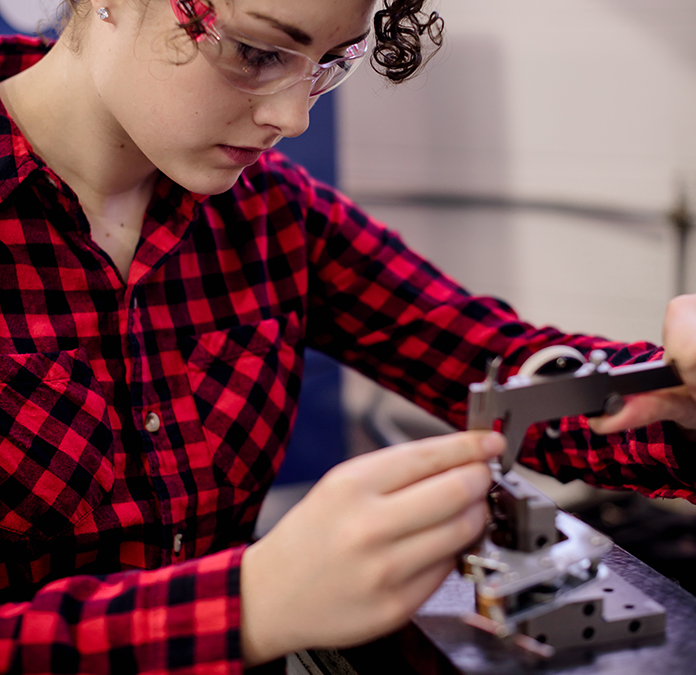
When I met her, she was working on an isometric drawing in AutoCAD. She walked me through how she was using dimensions, layout lines and different commands to construct the design. She was considering civil engineering as a career and was also taking courses through Northwestern Michigan College.
When I asked whether the program was living up to her expectations, she said it was. She was also enrolled in North Ed Early College, which allows students to take college courses while attending Career Tech and provides funding for an additional year at Northwestern Michigan College after 12th grade. Having started as a sophomore, she hoped to earn both a high school diploma and an associate degree before continuing at Michigan Tech or Kettering University, potentially entering with junior standing.
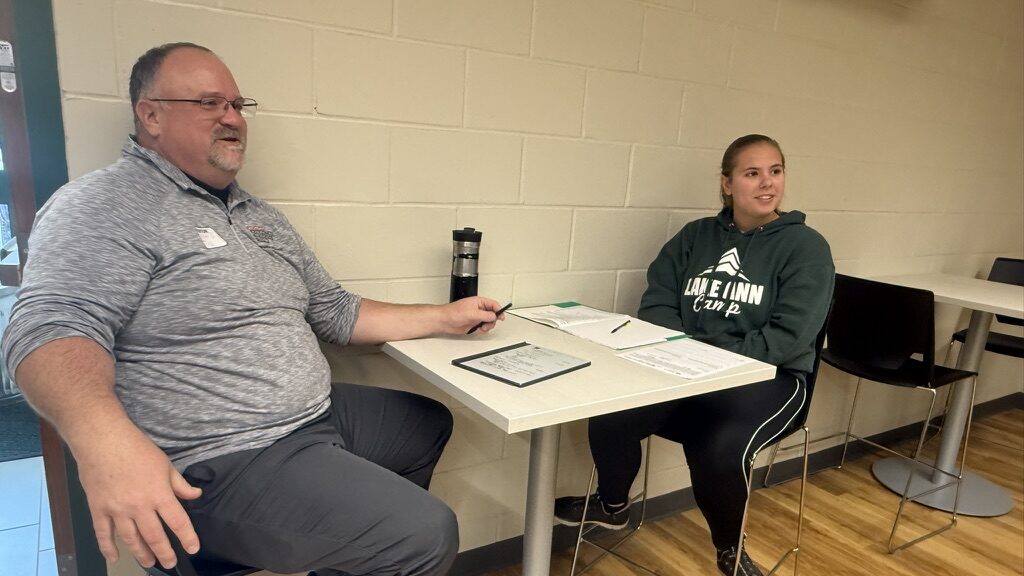
The academy also connects students with mentors from business and industry through a one-to-one mentoring program. During my visit, Patrick Lamb, North Ed’s Assistant Superintendent of Career and Technical Education, introduced me to Kevin Olds, a manufacturing representative who was meeting with a student. Each student is paired with a professional mentor.
Soon after, I met Sarah Kolle, a mathematics and science teacher in the engineering program. After eight years teaching middle school mathematics, she was learning to approach familiar content in new ways.
Kolle had valued collaboration in her previous position, particularly opportunities to co-teach. At North Ed, that collaboration takes a different form. Engineering, English, mathematics and science teachers work with the student services team to coordinate instruction around students’ academic needs and the demands of the engineering program.
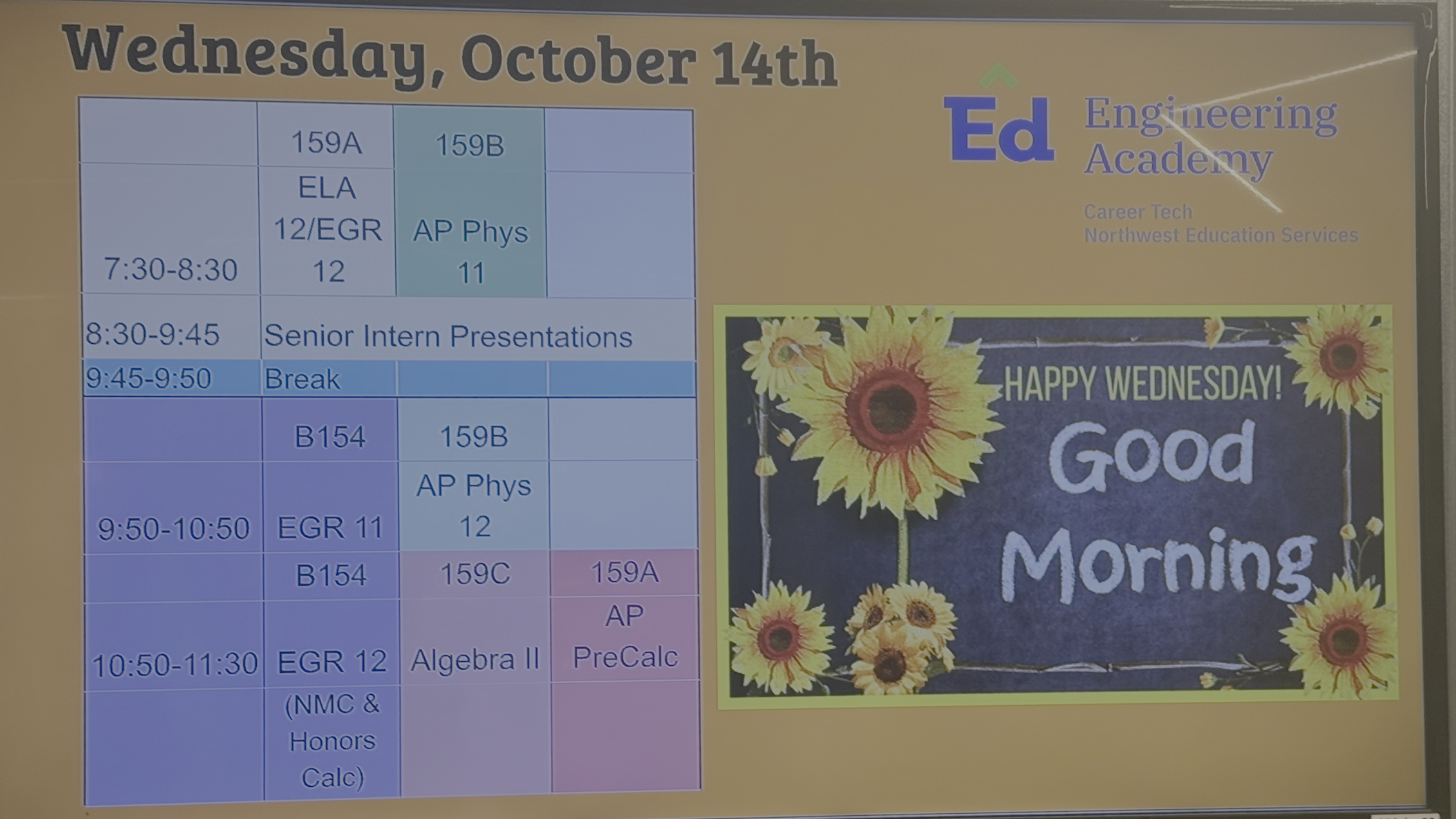
The engineering team meets every Tuesday afternoon throughout the school year with Assistant Principal Matthew Griesinger to examine student needs, coordinate instruction and develop the schedule for the following week. Rather than following the same daily schedule throughout the semester, the team adjusts how instructional time is organized based on students’ progress and the learning demands across courses. The resulting schedule is posted for students, showing how their time will be organized among subjects and activities.
That collaboration also shapes instructional decisions. This year, for example, the program brought all its engineering students into AP Physics I rather than dividing them between chemistry and physics. Kolle described how she intentionally connects Algebra II and trigonometry with physics, adjusting the sequence of instruction so students encounter mathematical concepts when they need them in their science and engineering coursework. That coordination is particularly important for the smaller group taking Algebra II and physics concurrently, while most of her physics students have already advanced into precalculus or calculus. Teaching both subjects allows Kolle to anticipate where students may struggle with mathematical foundations and help them make connections across courses.
Kolle’s learning also extended beyond engineering. During the instructional rounds the previous day, she had observed construction students who were reading construction codes, then using the Pythagorean theorem to lay out a building accurately. The mathematics was familiar, but seeing students apply it in a different setting gave her another perspective on how they might develop and demonstrate their understanding.
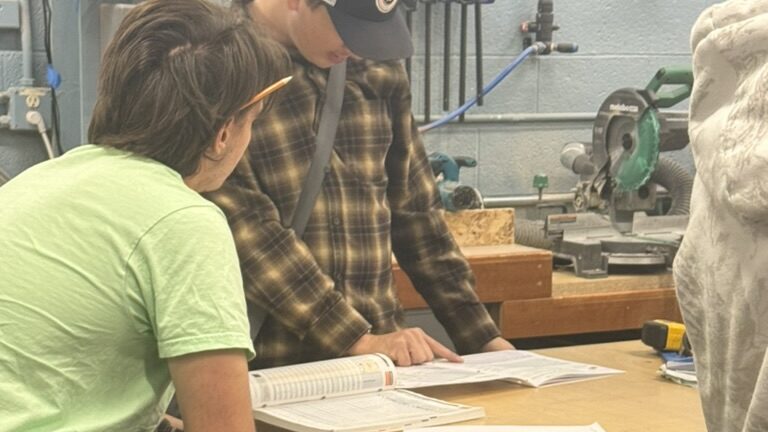
When we talked about the instructional rounds debrief I had attended earlier that morning, Kolle described how valuable it had been to visit other programs and exchange ideas with colleagues she may not otherwise encounter during the school day. She was already considering adapting a gallery walk activity from the debrief for her own students and thinking more carefully about how clearly students understood what they were expected to learn and what successful performance looked like.
Our conversation turned to North Ed’s ongoing work with competency-based learning and evidence-based reporting, including how teachers determine what constitutes evidence of proficiency and how students use that evidence to understand their progress toward mastery.
Within the engineering program, teachers organize learning around four broad ideas: plan, do, study and communicate. Kolle could readily see how those expectations applied to engineering and science, where students could demonstrate their understanding through investigations, experiments and the application of scientific concepts. Translating those same expectations into meaningful evidence of mathematical proficiency was more challenging. After years of teaching in a traditional, points-based system, she was still exploring how to assess and report what students knew and could do in mathematics within that framework.
Deb Menchaca, a mathematics teacher who had spent years working across North Ed’s technical programs, had been particularly helpful as Kolle worked through those questions. Her experience with academic integration and evidence-based reporting offered a perspective Kolle could draw on as she reconsidered her own practice.
Later that afternoon, I met Menchaca in the welding program. Our conversation revealed how working alongside technical instructors had changed her own understanding and teaching of mathematics.
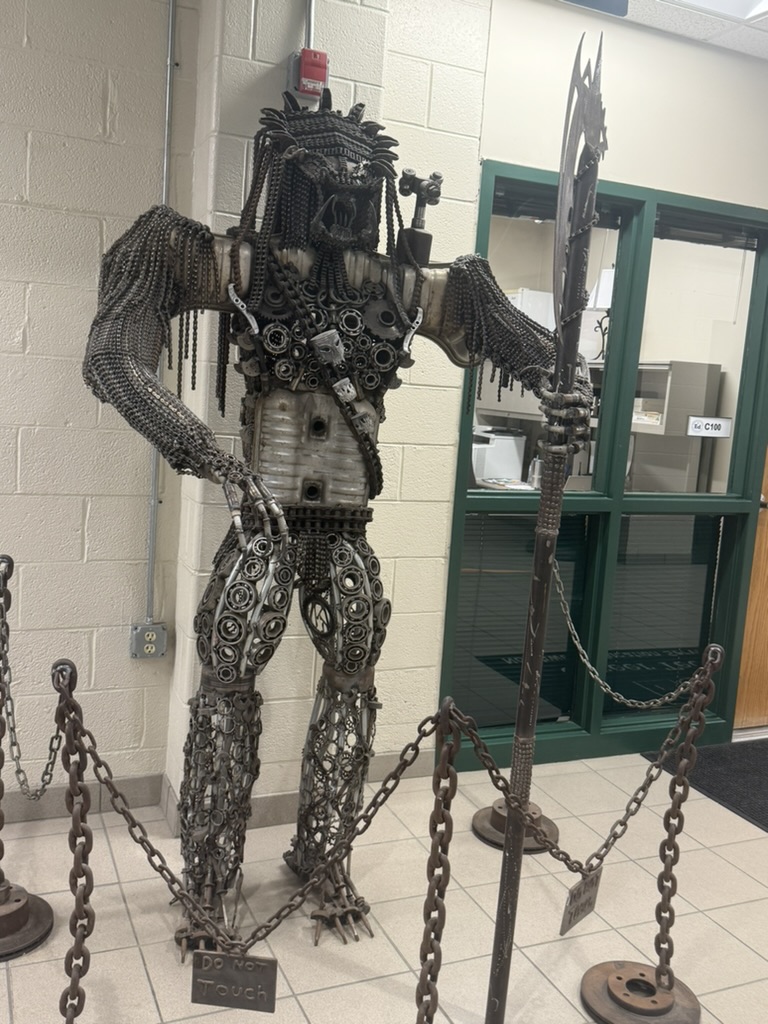
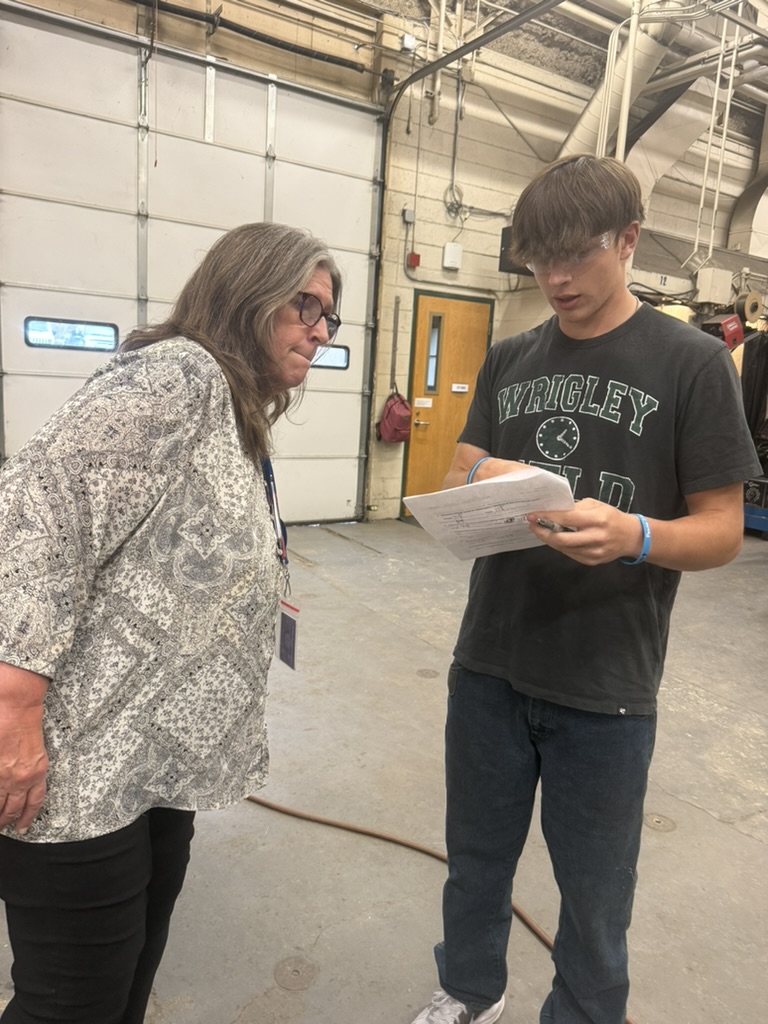

She recalled struggling to make sense of electrical concepts in calculus-based college physics. Years later, at North Ed, Tim VanderMeulen, a master electrician and Robotics & Automation instructor, helped her understand how those concepts worked in practice.
“I’m a math teacher, but I really get it now,” she told me. “I understand what it’s about.”
She described an activity developed with a welding instructor in which students moved around the shop measuring equipment to within one-sixteenth of an inch. Some struggled to identify what they were supposed to measure. Others had difficulty achieving the required precision or recognizing when they needed clarification. The experience helped Menchaca see what students still needed to learn about applying mathematical knowledge, even when they could perform the procedures on paper.
One student recognized the connection to Algebra II at his home high school and brought his mathematics materials to show her. For Menchaca, it was an example of a student recognizing how the mathematics he was learning in one setting applied in another.
Lamb traced North Ed’s approach to academic integration back to an experience during his time as an assistant principal. Students in the Electrical Occupations program had visited the lineman program at Alpena Community College, where none passed the mathematics portion of the assessment. The results raised a practical question about what needed to change before they returned the following spring.
Lamb worked with Menchaca and Tim VanderMeulen, then the Electrical Occupations instructor, to begin integrating Algebra II content into the program. That required VanderMeulen to dedicate instructional time to core academic content, while Menchaca needed to understand more deeply how mathematics was applied in electrical work. Lamb remembered the experience as a turning point, helping demonstrate to other technical instructors, some of whom had resisted academic integration, that the approach could work. Over time, core academic instruction became an integral part of the programs rather than an option for students who elected it.
Today, integration looks different across programs, with academic teachers sometimes working alongside technical instructors and sometimes teaching separately. Students encounter Algebra II in Robotics & Automation and electrical work, along with reading, writing and communication within their technical fields.
Griesinger described an upcoming automotive assessment in which students develop a pamphlet explaining the components of a four-stroke engine to a prospective customer. Assistant Principal Matt Nausadis extended the example to the interactions students may encounter in the workplace, including listening to customers describe a problem, explaining what might be wrong with an engine and discussing potential repair costs. Together, the examples illustrated how technical knowledge and communication skills intersect in the work students are preparing to do.
As academic and technical instruction became more closely connected, North Ed’s educators also began reconsidering how they assessed and reported what students had learned.
Lamb recalled a visit to Adlai E. Stevenson High School in Illinois, where North Ed had sent a group of educators to strengthen their professional learning communities. During the visit, Menchaca and several colleagues attended a session on evidence-based reporting and recognized its potential to build on the academic integration already underway. Lamb described the experience as the beginning of North Ed’s work with evidence-based reporting.
North Ed’s work with evidence-based reporting raised questions about traditional grading practices that combined assignments, participation, work habits and demonstrated knowledge into a single score. Griesinger described how a student might earn a B+ by being quiet and compliant without demonstrating proficiency. Evidence-based reporting offered a way to distinguish what students knew and could do from their work habits and professional expectations.
In technical programs, proficiency might mean measuring accurately, bending conduit to a specified angle or explaining a mechanical system. Teachers needed to determine what constituted convincing evidence, how students could demonstrate their learning and how to respond when they needed additional opportunities to improve.
From Observation to Professional Learning
The day before my visit, North Ed organized educators into 12 groups, each visiting three classrooms across different programs. They gathered written evidence related to two questions:
- How does tiered instruction increase rigor by inviting students to think critically and apply skills in authentic situations?
- How do students use evidence-based reporting to understand their proximity to proficiency and guide their progress toward mastery?
The following morning, I joined the instructional rounds debrief facilitated by Griesinger and Curriculum Director Chris Haines. Teachers worked in groups of four to six, reviewing observations recorded on sticky notes, looking for patterns and developing predictions about what students might experience on a typical day.
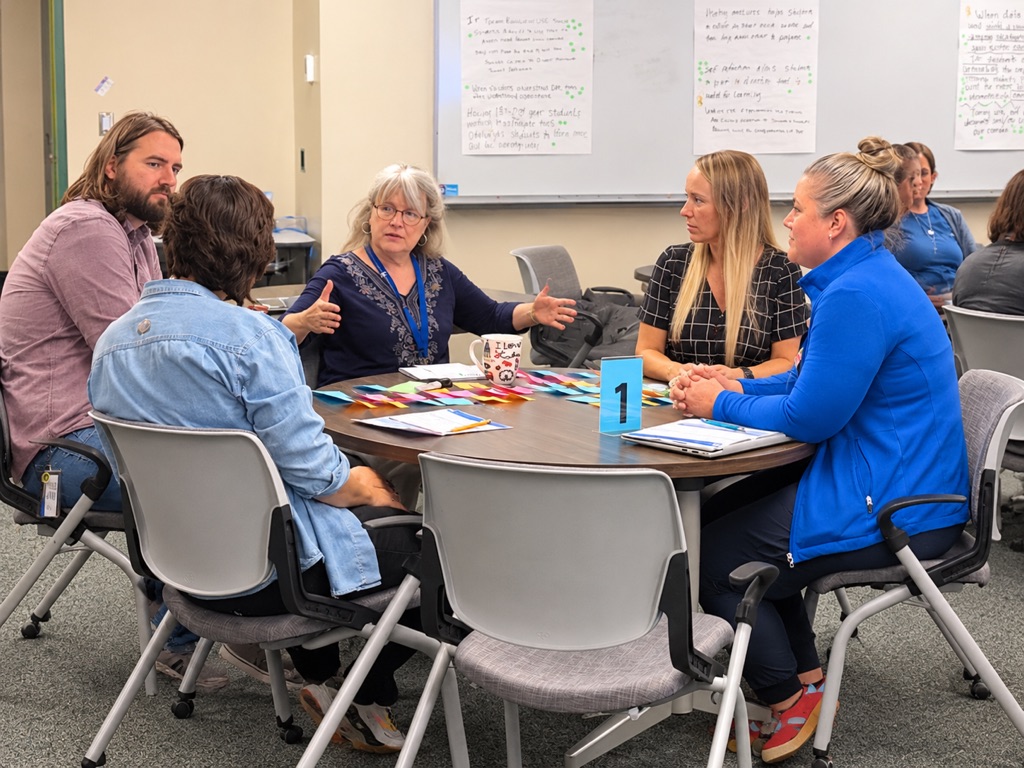
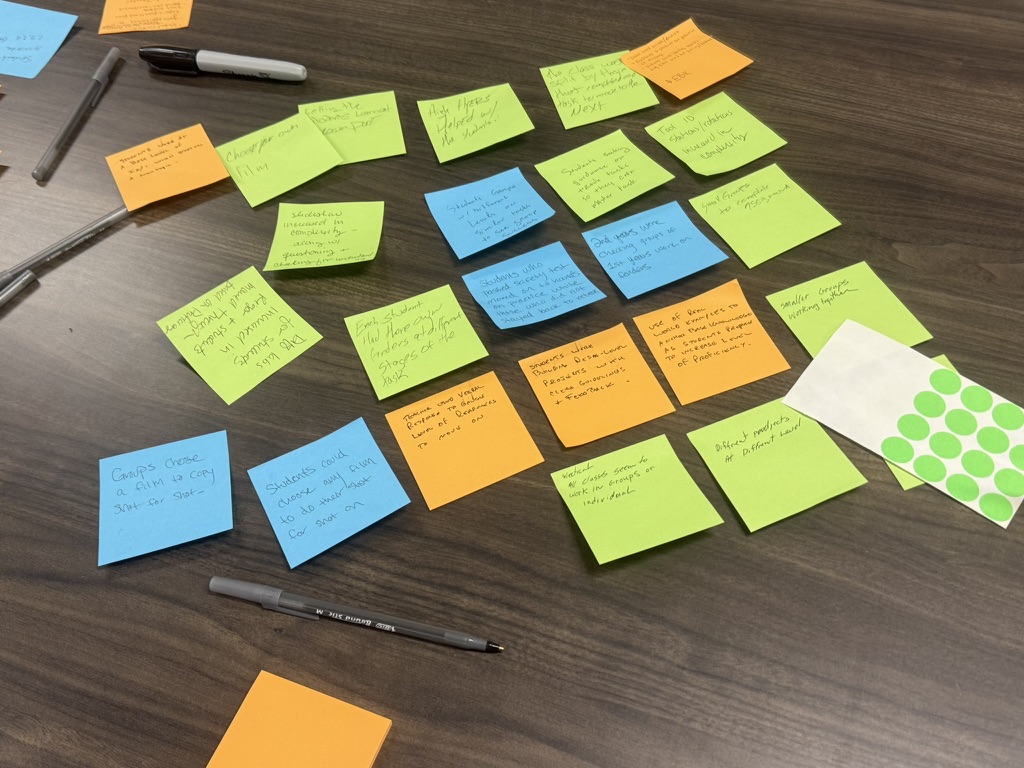
Griesinger encouraged the groups to make their predictions challenging but kind. The purpose was to examine instructional patterns without turning the observations into judgments about individual teachers.
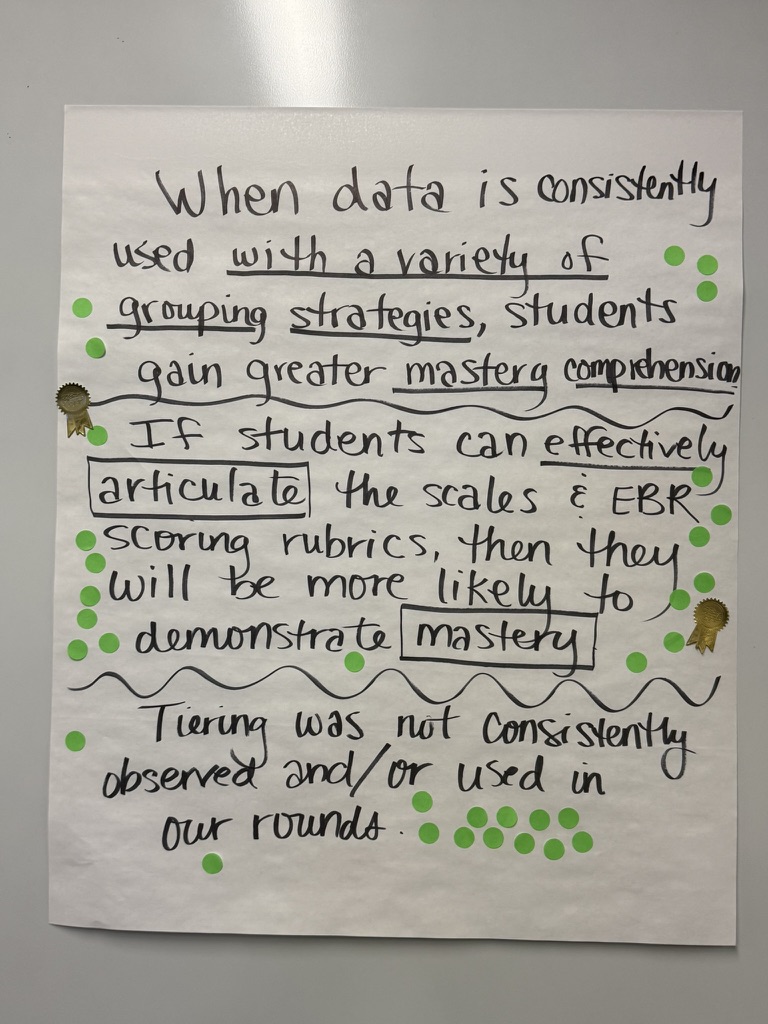
The discussions revealed different perspectives. One group predicted that students who understood evidence-based reporting rubrics would be better able to assess their progress and demonstrate mastery. Another noted that tiered instruction had not been consistently observed, raising questions about whether teachers and students shared a clear understanding of what it meant. The predictions raised questions about how consistently those instructional practices were understood and experienced across classrooms.
Teachers then participated in a gallery walk, reviewing the groups’ predictions and using voting dots to identify questions relevant to their own instruction and those that might warrant attention across the building.
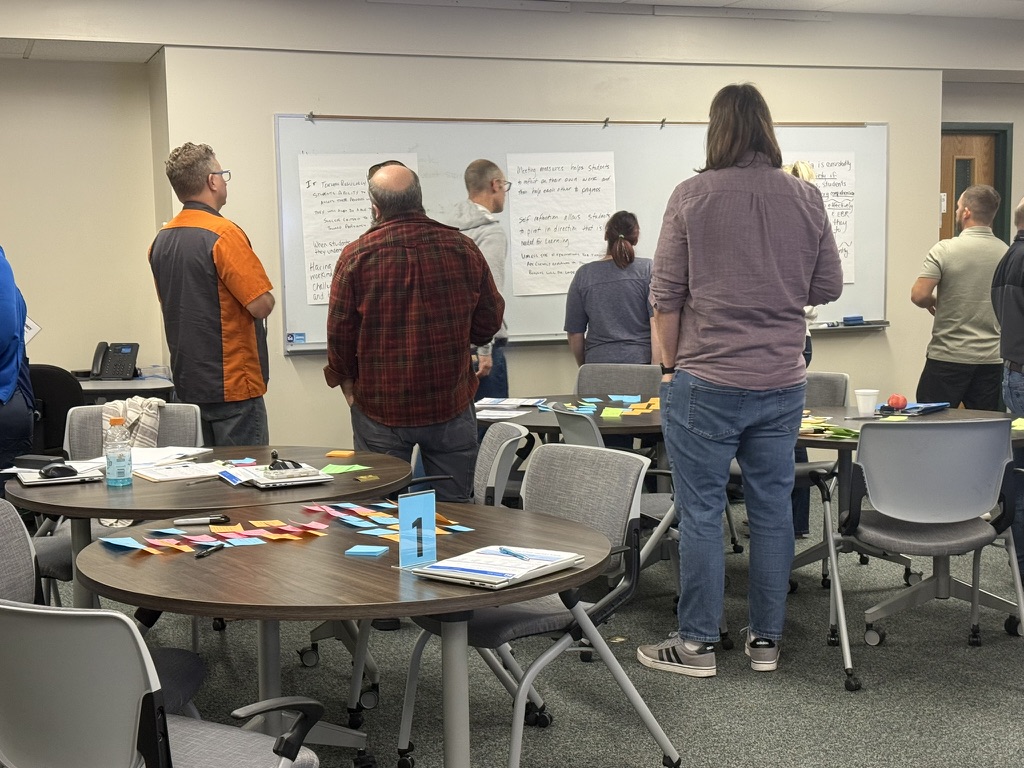
I asked Griesinger what would happen with the information. He explained that the administrators would work with a small group of teachers to examine the patterns and determine what professional learning might follow. Some needs could be addressed across the staff, while others might be more relevant to particular teachers or programs. They were also open to revisiting the problem of practice based on what the evidence revealed.
Our conversation turned to how North Ed’s instructional focus had changed. For roughly two years, the problem of practice had centered on student engagement. As educators developed a stronger shared understanding of engagement, administrators and instructors began questioning whether students being on task and participating necessarily meant they were encountering sufficiently challenging learning.
North Ed had developed supports for students who needed additional assistance, including teacher consultants and other personnel working alongside instructors. But administrators were increasingly concerned about students who were already demonstrating proficiency. They described how teachers might ask those students to help classmates or complete additional work without necessarily increasing the cognitive demands of their learning. That realization helped shift the focus from whether students were engaged to whether the learning was sufficiently challenging for students with different levels of readiness.
Many of North Ed’s technical instructors enter teaching after careers in business and industry. They bring considerable professional expertise and may already recognize when a student is ready for a more complex challenge, even if instructional terminology such as tiering is unfamiliar. Connecting that professional judgment to a shared understanding of instructional practices was part of the learning underway.
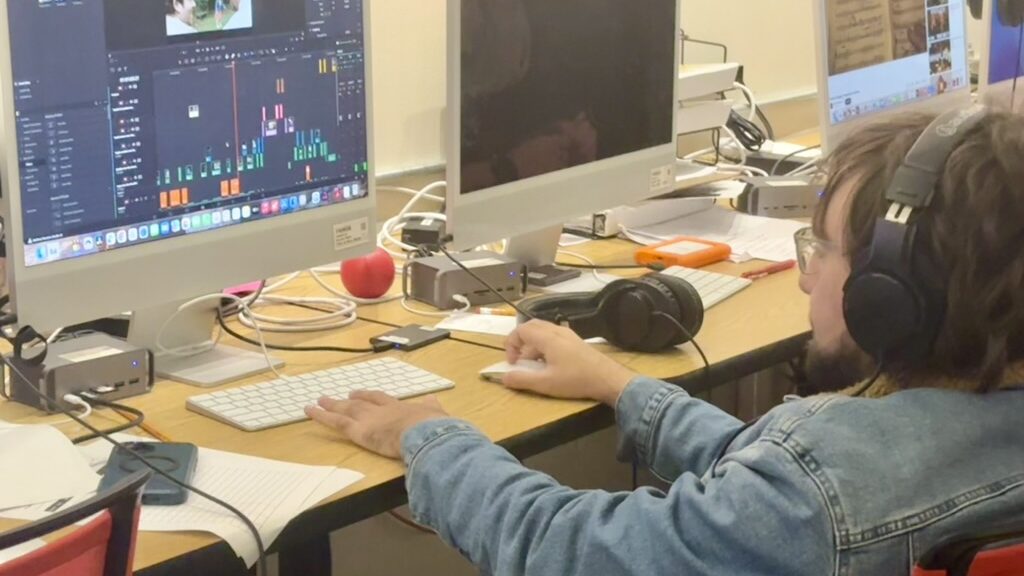
During the debrief, I talked with Zac Wendland, a Film & New Media instructor who was reconsidering his understanding of tiered instruction. He had approached tiering largely through student choice and opportunities to complete more advanced assignments. The discussion was prompting him to think more carefully about what individual students already understood and how that evidence might inform the next challenge.
Later that day, I visited Wendland’s classroom and encountered a student whose work illustrated the kinds of advanced learning opportunities he was considering. A student with advanced filmmaking skills and a strong interest in the field had taken on a leadership role in a video production and was preparing to compete in an independent film festival. As he walked me through his project, his enthusiasm was unmistakable. I had the sense he would have continued talking much longer had I not needed to move on.
Creating the Conditions for Learning
Across North Ed, educators had opportunities to learn from colleagues, examine evidence from classrooms and reconsider their practice. Those opportunities were built into how the center organized its work, even as teachers and administrators continued to grapple with questions about instruction and assessment.
John Stoddard, the last instructor I met during my visit, taught automotive collision repair. After approximately 40 years working at a Chevrolet dealership in Cadillac, including 30 years as its head painter, he had retired from the industry. When a counselor encouraged him to consider teaching, he wasn’t sure he could do it. He had raised three children and thought he might be able to work with students, but teaching would be a new experience.
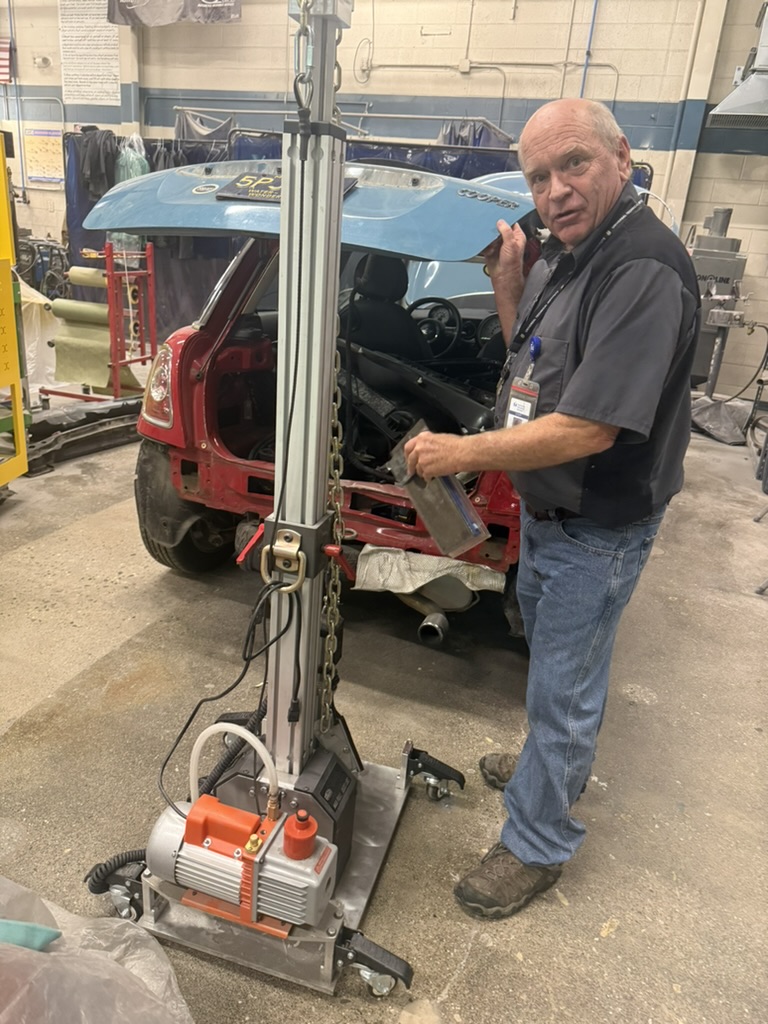
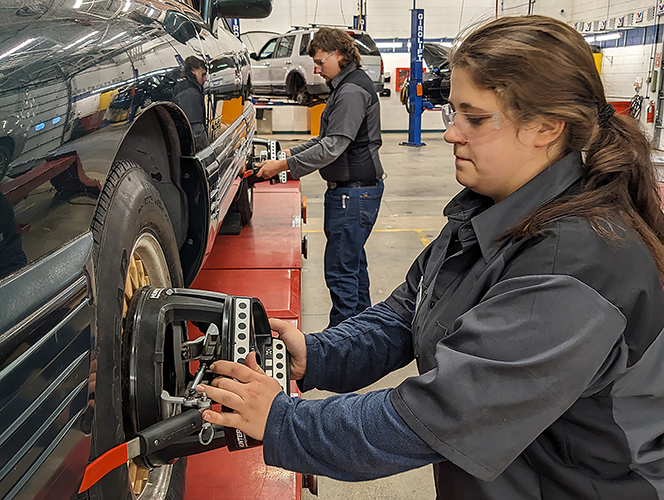
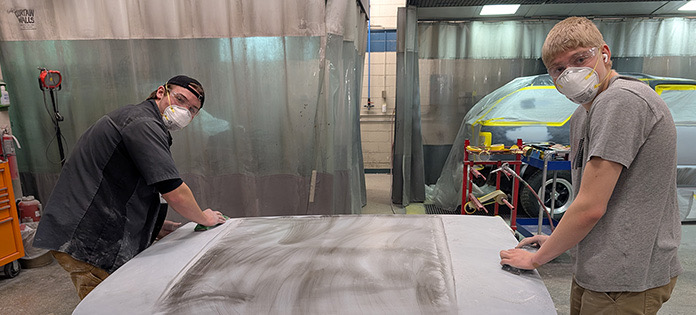
Now in his second year, he brought a career’s worth of technical knowledge and industry relationships into the classroom while continuing to learn himself. He stayed connected with industry professionals, drawing on those relationships to create learning opportunities for students. He described borrowing specialized equipment from a local body shop for students working on a damaged Mini Cooper and obtaining leftover paint from his former dealership for classroom use.
When I asked what he enjoyed most about teaching, he talked about helping students find employment. He described the satisfaction of connecting students with jobs across the region and visiting former students to see how they were doing. Even with four decades of industry experience, he acknowledged how much he was still learning about teaching.
His reflections brought me back to the sophomore I had met earlier in the day. She was leaving home before 5:30 each morning to pursue opportunities she hoped would shape her future. He had spent four decades developing expertise in his field and was now learning a new profession, drawing on that experience to help students pursue opportunities of their own.
Their experiences were different, but both reflected something I had encountered throughout my visit. Learning continued to open new possibilities for students and the educators working alongside them.